Table of Contents
Introduction: Meesho Affiliate Program
Meesho affiliate program gives creators, bloggers, and community sellers a straightforward way to earn by promoting budget-friendly products with trackable links, making it ideal for short-form video, SEO listicles, and WhatsApp deal drops. Focus on eligible catalogs, direct deeplinks, and SubID tracking to protect attribution, improve confirmation rates, and steadily grow EPC.
Wrap-up
- Start with high-intent categories (women’s fashion, home & kitchen, beauty), lead with “Under ₹499/₹699” hooks, and rotate SKUs weekly to match live campaigns.
- Use one clear CTA, test app vs web paths, and standardize SubIDs to find winning placements fast; monitor EPC, CTR, CVR, AOV, and confirmation rate.
- Keep disclosures clear, claims accurate, and traffic compliant; verify commissions, cookie window, and payout schedules in your dashboard or offer page before scaling.
If this guide helped, consider bookmarking it and revisiting before each campaign cycle—consistent testing plus clean attribution is how the Meesho affiliate program compounds into reliable revenue.
What is the Meesho Affiliate Program?
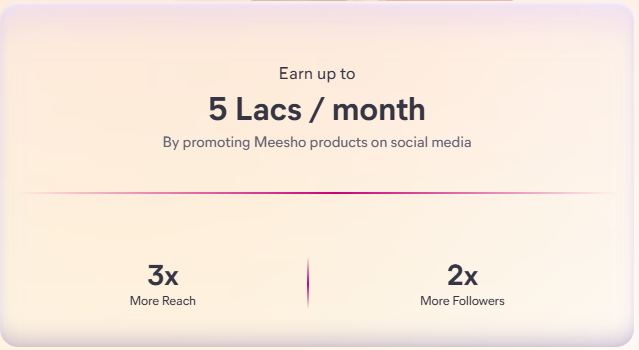
The Meesho affiliate program is a performance-based model where creators, bloggers, and social sellers earn a commission by promoting Meesho products using unique tracking links across social media, YouTube, WhatsApp/Telegram, and blogs. It’s designed for easy sharing, fast link generation, and transparent tracking so you can monetize audiences interested in fashion, home, beauty, and budget shopping.
How Meesho affiliate program works
- You generate a unique affiliate/deeplink for any Meesho product or collection and share it with your audience.
- When someone clicks your link and completes a purchase within the cookie window, you earn a commission credited to your dashboard.
- Orders typically appear in tracking within 24–48 hours, and commissions confirm after the return/cancellation window.
Who it’s for
- Instagram Reels/YouTube Shorts creators showcasing budget fashion and home finds.
- WhatsApp/Telegram community admins sharing daily deals.
- Bloggers and niche site owners targeting affordable shopping keywords.
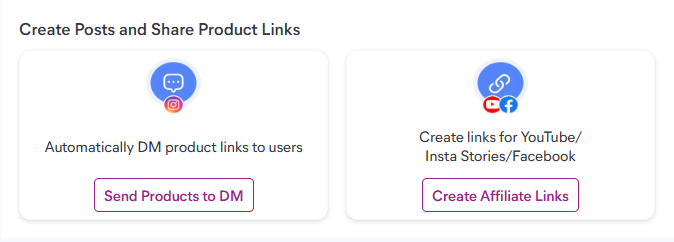
Key benefits of Meesho affiliate program
- Massive catalog with high-demand categories (women’s fashion, home & kitchen, beauty, accessories, electronics).
- Competitive commissions on eligible items and frequent campaigns that boost rates.
- Simple setup via official program routes or reputable affiliate networks; supports deeplinks and subIDs for better attribution.
Typical commission and cookies
- Commission rates vary by category, campaign, and partner route; on eligible products you can expect competitive percentages, while non-eligible items may earn significantly less.
- Cookie windows commonly range around 15–30 days depending on the campaign/network; always verify current terms in your dashboard or offer page.
Getting started quickly
- Apply to the Meesho affiliate/influencer entry point or join via a trusted affiliate platform that runs Meesho CPS offers.
- Shortlist 20–50 evergreen SKUs in high-intent categories and build shareable lists (e.g., “Top kurtis under ₹499”).
- Add subIDs to links to track platform performance (IG vs YT vs blog) and refresh links weekly based on live campaigns.
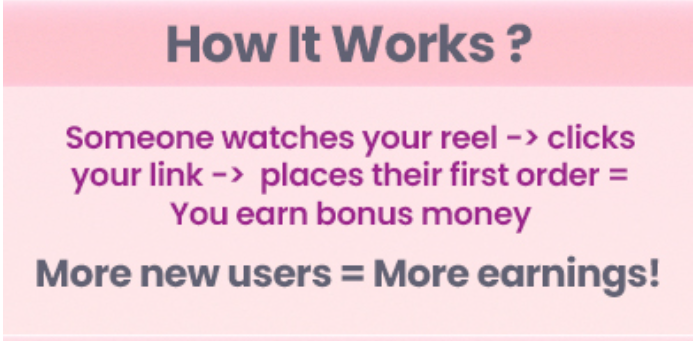
How the Meesho Affiliate Program Works
Overview
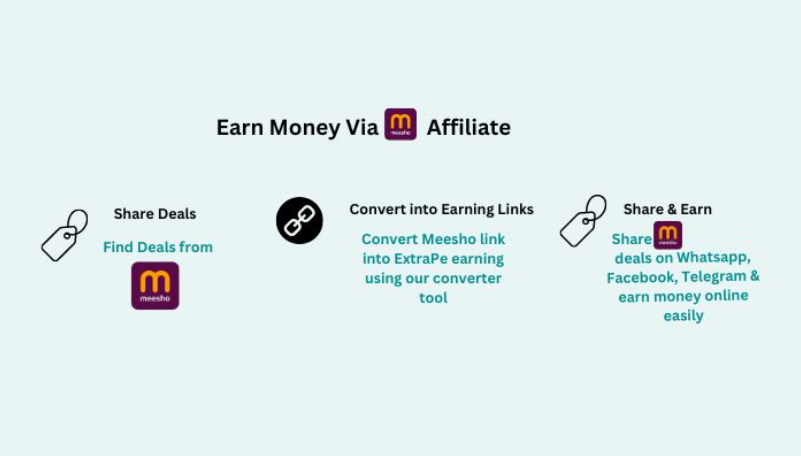
The Meesho affiliate program lets you create unique links for Meesho products and earn a commission when your audience purchases within the cookie window; tracking is shown in your dashboard and commissions confirm after the return period.
How the funnel works in Meesho affiliate program
- Click: A user clicks your Meesho affiliate link from social, YouTube, WhatsApp, or your blog.
- Attribution: A cookie or session ties that user to your link for a defined duration.
- Purchase: If the user orders during the cookie window, the sale is attributed to you.
- Confirmation: After the return/cancellation window, the commission moves from pending to confirmed and becomes payable.
Link creation and sharing
- Generate a product or collection deeplink from your affiliate dashboard or approved partner portal.
- Append subIDs/UTM parameters to identify traffic sources (e.g., IG, YT, Blog).
- Place links in video descriptions, bio/link-in-bio, WhatsApp/Telegram posts, and on-page CTAs.
Tracking and dashboards
- Metrics you’ll typically see: clicks, unique clicks, add-to-cart, orders, pending commissions, confirmed commissions.
- Tracking usually appears within 24–48 hours; confirmation follows the returns window.
- Use subIDs to pinpoint high-EPC sources and refine promotion focus.
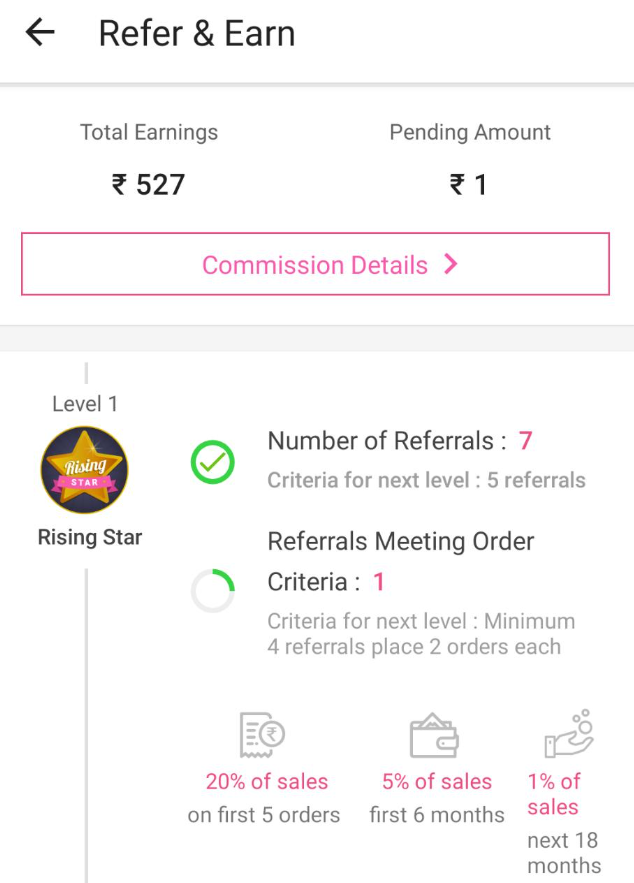
Cookie window and attribution
- The cookie duration is defined per campaign/partner; many offers use a 15–30 day range.
- Last-click attribution often applies; avoid mixing competing links that can overwrite attribution.
- App vs web behavior may differ—test links across devices to validate tracking.
Commissions and eligibility
- Commission rates vary by category and campaign; eligible items earn higher rates than non-eligible ones.
- Campaign landing pages may offer boosted rates; check terms before promoting.
- Expect lower or zero commission on restricted categories per campaign rules.
Payouts and timelines
- Payouts trigger after commissions move from pending to confirmed post the return window.
- Frequency, threshold, and payment mode depend on your enrollment route (direct vs partner network).
- Keep a cash flow buffer, as ecommerce confirmations typically lag by several weeks.
Optimization tips
- Promote high-intent lists (e.g., “Best kurtis under ₹499”) and seasonal picks.
- Use short-form videos and carousels; place the link early in descriptions and pin comments.
- Rotate SKUs weekly to align with live campaigns and track EPC shifts by source.
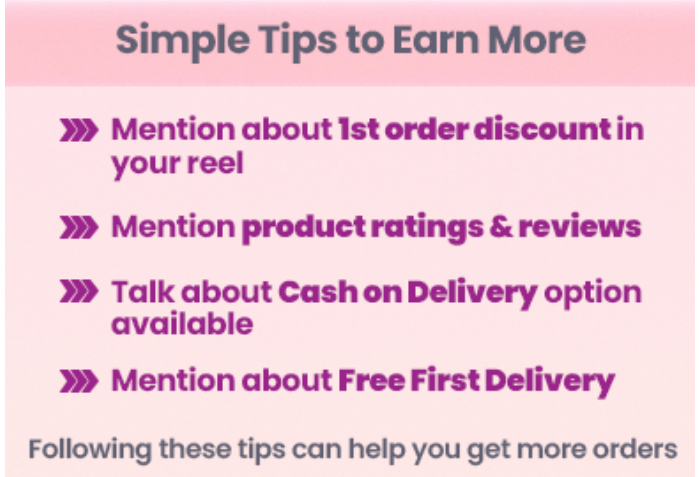
Meesho affiliate program Commission Rates
Meesho affiliate commission rates determine how much you earn per confirmed sale when promoting eligible Meesho products through your unique links, with rates varying by category, user type (new vs existing), and the specific campaign or partner network you use.
What “commission rate” means
A commission rate is the percentage of the sale amount credited to you when an order is attributed to your link and successfully completes the return/cancellation window. In Meesho campaigns run via partner networks, this is typically structured as CPS (Cost Per Sale), and the exact percentage is defined on the offer page.
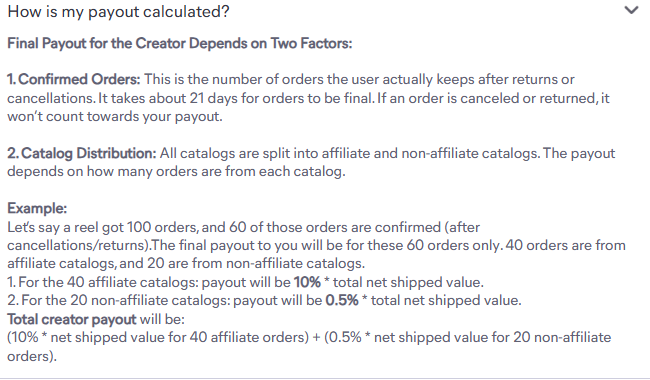
Typical ranges you can expect
Credible partner and guide pages commonly cite commission rates up to 15% on eligible items for the Meesho affiliate program, though exact rates depend on category and campaign. Some creator/influencer routes and partner communications mention higher ceilings on select catalogs or campaigns, sometimes up to 25%, but these are variable and campaign-bound. Always read the live offer terms in your dashboard or network listing, as rates can change without notice.
New vs existing user payouts
Several CPS offers differentiate rates by user type, for example 12% for new users and 4% for existing users on qualifying sales, which can materially affect EPC and strategy. If your audience skews toward first-time Meesho buyers, you may see higher average commissions under such split structures.
Category and eligibility impact
Rates can vary across categories like fashion, home, beauty, and electronics, and “eligible” catalogues may receive boosted rates during specific promotions or on designated landing pages. Non-eligible or restricted categories can have much lower or zero commission, so verify category eligibility before publishing links.
Cookie duration and confirmation timing
Cookie windows on Meesho CPS offers are commonly 15–30 days depending on the partner; example network listings show 15 days, which directly affects attribution. Tracking often appears within 24–48 hours, while confirmation typically takes 45–60 days to account for returns and cancellations common to ecommerce.
How this differs from seller commissions
Meesho’s seller-side model promotes 0% commission for sellers on most categories, which is unrelated to affiliate earnings and should not be confused with CPS payouts to affiliates. As an affiliate, you’re paid by the campaign terms for driving sales, not charged seller fees—these are distinct ecosystems.
Practical earning example
If a campaign pays 12% for new users and your average order value is ₹700, a confirmed new-user sale would earn ₹84; at 100 such sales per month, that’s ₹8,400 before adjustments. If the same audience is mostly existing users at 4%, earnings per sale drop to ₹28, so optimizing for new-user acquisition can significantly improve EPC.
Quick checklist to maximize commission in Meesho affiliate program
- Prioritize campaigns with the highest eligible rates in your niche and confirm user-type splits.
- Use subIDs to track which channels generate new vs existing users and shift effort accordingly.
- Refresh product links weekly to align with live boosted-rate catalogs and seasonal promotions.
Cookie Duration and Tracking
Cookie duration and tracking in the Meesho affiliate program determine how long your referral stays attributed after a click and when sales appear and confirm in your dashboard. Many credible guides list a 30-day cookie reference with tracking visible within 24–48 hours, though specific campaigns on partner networks may use a 15-day window—always check the live offer terms you’re using.
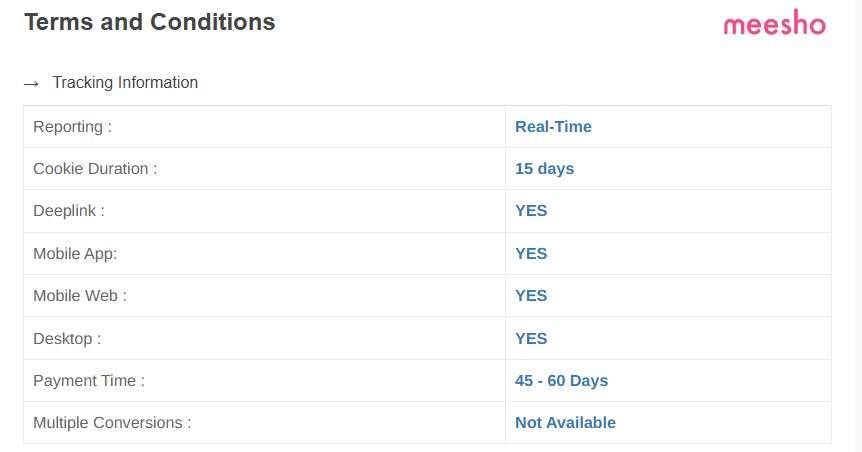
What cookie duration means in Meesho affiliate program
- Cookie duration is the time a click remains attributed to your affiliate ID; if the user purchases within that window, the sale credits to you.
- Programs choose different windows by category and buying cycle; 30 days is common in retail, while some CPS offers set shorter 15-day windows.
Typical Meesho ranges and timelines
- Multiple pages cite a 30-day cookie and tracking that shows up within 24–48 hours for Meesho affiliates, with confirmation after the returns window.
- Some network listings for the Meesho affiliate program specify a 15-day cookie, which affects attribution on delayed purchases.
How tracking works
- A click sets a cookie/session that carries your affiliate ID, and the partner records page views, clicks, and conversions for reporting.
- Key metrics you’ll monitor include clicks, orders, pending and confirmed commissions; confirmation typically follows 45–60 days due to returns.
Mobile app vs web behavior
- Attribution can vary by device and channel; test links across mobile web and app journeys to ensure consistent tracking on your audience’s primary platforms.
- Use subIDs to isolate performance by platform (e.g., IG vs YT vs Blog) and adjust content toward higher-EPC sources.
Best practices to protect attribution
- Avoid mixing competing links that can overwrite cookies; keep a single clear CTA per promo where possible.
- Remind users to purchase after clicking your link; time-sensitive content improves same-session conversions under shorter windows.
How to Join the Meesho Affiliate Program
Two ways to join
- Direct via Meesho: Apply on the official affiliate/creator page to access link tools and performance dashboards after approval.
- Via partner networks: Join a reputable CPS partner running the Meesho affiliate program to get deeplinks, subIDs, cookie details, and payout terms.
| Aspect | Direct via Meesho | Partner network route |
|---|---|---|
| Application | Apply on the official Meesho affiliate/creator page; approval required | Apply on the network, then request access to the Meesho CPS offer |
| Link tools | Official deeplink tools available after approval | Network deeplink generator with subIDs/UTMs for granular tracking |
| Terms visibility | Program terms and policies shown in the Meesho dashboard | Offer page shows commission rates, cookie window, and restrictions |
| Payouts | Paid per Meesho’s payout schedule and thresholds | Paid per the network’s payout schedule and thresholds |
| Flexibility | Focused on Meesho promotions only | Manage multiple brand offers from one dashboard |
| Analytics | Native Meesho reporting for clicks, orders, commissions | Network reporting; often more options for subID/channel analysis |
| Support | Meesho program/help resources | Network support plus offer-specific notes from the advertiser |
| Onboarding speed | Depends on Meesho’s approval timelines | Often faster if you already use that network |
| Best for | Creators focused primarily on Meesho | Affiliates managing many CPS offers and advanced tracking needs |
Step-by-step: Direct route
- Visit the official Meesho affiliate/creator page and start the application. Provide basic details, social profiles, and payment info if requested.
- Await approval; once approved, access your dashboard to generate product or collection links.
- Add subIDs to track platforms (IG, YT, blog), share links, and monitor clicks, orders, and commissions.
Step-by-step: Partner network route
- Sign up with a trusted network hosting the Meesho CPS offer and complete KYC/banking as required.
- Open the Meesho offer page to review commission rates, cookie duration, restrictions, and payout schedule.
- Use the network’s link generator to create deeplinks with subIDs, share across channels, and track performance.
Quick eligibility and setup tips
- Have active social channels or a blog to demonstrate relevant audience reach; this helps speed up approval.
- Configure payment details early to avoid payout delays after confirmation.
- Test links on mobile and desktop to validate attribution before scaling promotions.
Verification timelines and tracking
- Tracking typically appears within 24–48 hours in many Meesho affiliate guides; confirmation follows after the returns window per campaign rules.
- Cookie windows can vary: some network listings show 15 days; always check the live offer page or dashboard.
Payouts, Thresholds, and Timelines: Meesho affiliate program
Payouts, thresholds, and timelines in the Meesho affiliate program describe when earnings move from pending to confirmed and how/when those confirmed commissions are paid out. Expect tracking to appear within 24–48 hours, with confirmation commonly after a 45–60 day return window; payout thresholds and schedules then apply based on the program or partner network you’re using.
How payouts work
- Commissions are recorded as pending after a tracked sale and become confirmed only after the advertiser’s lock-in/validation period to account for returns and cancellations.
- Once confirmed, commissions move into the next payment cycle per your program or network’s payout schedule and minimum threshold.
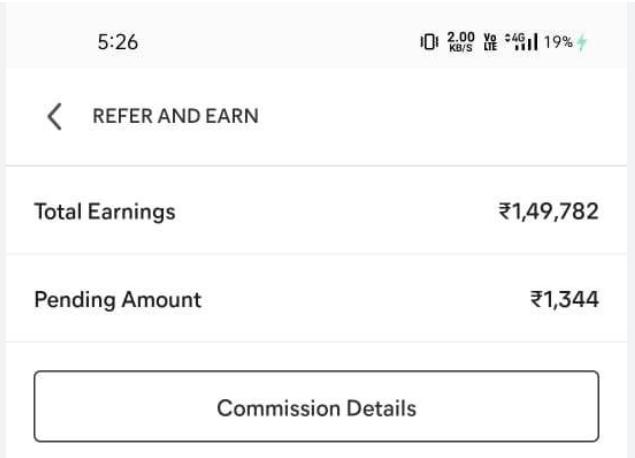
Typical thresholds and schedules
- Some partner networks listing the Meesho affiliate program show very low thresholds (e.g., ₹10 minimum) with frequent or even daily payouts after confirmation.
- If you join via other networks or directly, the payout frequency and minimums can differ; always check the specific offer or dashboard terms.
Tracking, pending, and confirmation timing
- Orders usually appear in tracking within 24–48 hours of the transaction.
- Confirmation often takes 45–60 days to allow for returns/refunds typical in ecommerce, after which confirmed amounts are eligible for payout cycles.
- Some platforms label these states explicitly as Pending, Estimated, and Approved/Confirmed to help affiliates understand each stage.
Factors that can delay payouts
- High return rates or cancellations can keep commissions pending longer or lead to reversals.
- Incomplete KYC or missing bank details on your network/account can pause disbursements despite having confirmed earnings.
- Offer-specific rules like hold time settings or validation windows can extend the payable date.
Direct vs partner network: payout differences
- Direct route: Payment timing and thresholds are governed by Meesho’s program rules visible in your dashboard.
- Partner networks: Payment cadence, methods, and minimums follow the network’s policies; some advertise daily payouts with low thresholds once amounts are confirmed.
Comparison table: payouts and thresholds
Best Categories and Products to Promote
The best categories and products to promote in the Meesho affiliate program are those with consistent demand, frequent campaigns, and strong social proof—especially women’s fashion, home and kitchen, beauty and personal care, accessories/footwear, and seasonal festival picks. These niches align with Meesho’s core buyer behavior and typically convert well for listicles, reels, and WhatsApp deal drops.
Women’s fashion (high volume)
- Sarees, kurtis, salwar suits, lehengas, dresses, tops, and jeans see steady demand across metros and Tier 2/3 cities, with spikes during festivals and wedding seasons.
- Create price-banded lists like “Best kurtis under ₹499” or “Top sarees under ₹699” to match high-intent searches and social discovery.
Men’s fashion and kidswear
- Kurta sets, shirts, t-shirts, jeans, and jackets perform well, while kids’ ethnic/western wear and school accessories add evergreen traffic.
- Bundle posts by occasion (festive outfits, back-to-school picks) for higher CTR and cart size.
Jewelry, accessories, and footwear
- Imitation jewelry, bags, belts, watches, sunglasses, and footwear categories convert due to low price points and gifting appeal.
- Promote combo sets and curated looks to increase AOV and cross-sell rates.
Home and kitchen essentials
- Bedsheets, curtains, organizers, cookware, and small kitchen tools are constant movers and ideal for SEO collections and routine WhatsApp drops.
- Lean into before/after visuals and “small upgrades under ₹399” angles to drive impulse buys.
Beauty and personal care
- Skincare, haircare, makeup, and grooming essentials trend year-round; affordable alternatives appeal to price-sensitive audiences.
- Focus on beginner kits, combo deals, and seasonal care lists for better EPC.
Seasonal and campaign-led picks
- Diwali decor, wedding jewelry sets, winterwear, and back-to-school kits benefit from short, intense demand cycles and boosted rates on some campaigns.
- Rotate SKUs weekly during festival periods to keep up with inventory and trending catalogs.
Comparison table: category playbook
Optimization tips for higher EPC
- Track subIDs per channel to find best performers and double down on categories with highest confirmed commissions.
- Prefer campaign landing pages or trending catalogs for higher rates/visibility where available.
- Use price filters and size/color variations in links to reduce bounce and returns.
Traffic Strategies for Meesho affiliate program
Traffic strategies for the Meesho affiliate program revolve around short-form video, price-banded listicles, and chat-based deal drops, all tracked with subIDs to find the highest EPC sources. Focus on Instagram Reels/YouTube Shorts for discovery, SEO posts for intent, and WhatsApp/Telegram for conversion, while aligning links to live campaigns and trending catalogs.
Instagram Reels and YouTube Shorts
- Use a show-first, explain-later format: hook with the product in action within 3 seconds, then add benefits and price to drive taps.
- Keep videos under 10–15 seconds, add on-screen text for price and key benefit, and pin the affiliate link at the top of descriptions or in the first comment.
- Sync content with trends and seasonal demand (festivals, winterwear, wedding sets) to leverage cultural spikes in discovery.
WhatsApp and Telegram deal drops
- Push daily “Top 5 under ₹499” picks with direct deeplinks; use a single clear CTA per drop to avoid cookie overwrites.
- Schedule posts at peak shopping hours (evenings/weekends) and bundle complementary SKUs to lift AOV.
- Refresh lists weekly to match inventory, ratings, and any boosted-rate catalogs.
SEO listicles for intent traffic
- Create price-banded listicles like “Best kurtis under ₹499” and category hubs that you can refresh monthly.
- Interlink related posts (e.g., sarees → jewelry/footwear) and place CTAs above the fold and after every 3–4 items.
- Target long-tail modifiers (size, color, occasion, material) to reduce bounce and match buyer intent.
SubID tracking and EPC optimization
- Append SubIDs to each link to track source and placement (reel_top, yt_desc_top, blog_abovefold) and shift focus to the best-performing channels.
- Monitor EPC and CR weekly; prune underperforming SKUs and double down on SKUs with sustained confirmed commissions.
- Segment by audience and device; test web vs app journeys and adjust CTAs to the winning path.
Creator cadence and posting schedule
- Maintain a 3–5 posts/week cadence for Shorts/Reels; pair one 10–15s demo with a longer review to capture impulse and considered buyers.
- Use templates for thumbnails, overlays, and captions to speed production and keep brand recall high.
- Repost top performers across platforms and languages to reach Tier 2/3 audiences effectively.
Compliance and traffic quality
- Avoid incentivized traffic or misleading claims; focus on accurate pricing and product specs to reduce returns.
- Include clear disclosures where required and keep a single primary CTA to prevent attribution loss.
- Maintain content relevance; mismatched traffic depresses EPC and increases reversals.
Comparison table: traffic channels vs outcomes
Conversion Optimization and EPC Growth: Meesho affiliate program
Conversion optimization and EPC growth for the Meesho affiliate program means turning more clicks into confirmed sales and increasing earnings per click by improving offer selection, on-page persuasion, and link attribution. The focus should be on high-intent products, frictionless link journeys, and disciplined testing using subIDs to scale what works.
Core principles for higher EPC
- Prioritize eligible catalogs with strong social proof (ratings, reviews, recent sales) and low return risk to improve confirmation rates.
- Keep journeys short: send users to the exact variant or curated list with clear pricing and availability to reduce drop-offs.
- Refresh links weekly to align with live campaigns, inventory, and seasonal demand.
Offer selection and pricing psychology
- Lead with “Under ₹499/₹699” hooks in fashion and home, then add a few higher-margin items to lift AOV.
- Use bundles/combo deals and multi-unit savings to improve cart value without hurting conversion.
- Avoid categories with frequent size/fit returns unless content addresses sizing and material clearly.
Page and content tactics
- Put CTAs above the fold and after every 3–4 items in listicles; repeat link + price in Shorts/Reels description and pinned comment.
- Use clear benefit bullets: 1–2 use-cases, key material/size points, and maintenance tips to reduce post-purchase regret.
- Add comparison snippets (e.g., “vs previous model” or “vs similar pick”) to speed decisions.
Link architecture and attribution
- Use deeplinks to final PDP/collection; avoid unnecessary homepage hops that can break intent.
- Standardize subIDs: channel_placement_variant (e.g., reels_top_kurti499, blog_abovefold_bedsheet399) to pinpoint winners.
- Keep one primary CTA per post to prevent cookie overwrites; minimize competing links on the same screen.
Testing cadence and KPI benchmarks
- Run weekly sprints: ship 5–10 new SKUs, retire bottom 20% by EPC, and duplicate top 20% with new creatives.
- Track EPC, CTR, CVR, AOV, and confirmation rate; aim to improve one metric per sprint rather than everything at once.
- Segment performance by device, language, and region to uncover pockets of outsized returns.
Reducing reversals and boosting confirmations
- Feature products with accurate sizing charts, clear materials, and recent positive reviews to lower returns.
- Prefer sellers with reliable shipping and good ratings; mention delivery timelines to set expectations.
- Avoid aggressive claims; align content with catalog photos and specs.
Creatives that convert fast
- For Reels/Shorts: open with the product in use, overlay price and one benefit, then a concise CTA to check out via link.
- For blogs: lead with “Top X under ₹499” or “Best for [occasion]” lists; include 2–3 real-life photos if possible.
- For WhatsApp: daily “Top 5 under ₹499” with single CTA link; add emojis sparingly to highlight price and key benefit.
Comparison table: EPC growth levers
| Lever | What to do | Expected impact | How to measure |
|---|---|---|---|
| Offer selection | Pick eligible SKUs with 4+ ratings, recent sales, low return categories | Higher conversion and confirmation rate | EPC, confirmation rate, returns ratio |
| Link journey | Deeplink to PDP/collection; minimize clicks and avoid homepage | Higher CTR-to-order conversion | CVR from click to order |
| Price framing | Lead with “Under ₹499/₹699”; add 1–2 higher-margin picks | Better AOV with stable CVR | AOV, EPC |
| SubID tracking | Use channel_placement_variant naming; test 3–5 placements | Identify top placements quickly | EPC by SubID |
| Creative hook | 3-second product demo hook; benefit + price overlay | More clicks from social | CTR, watch time |
| Trust signals | Reviews, ratings, sizing info; accurate images | Fewer reversals, faster confirmations | Reversal rate, confirmation time |
Compliance Guidelines and Common Pitfalls: Meesho affiliate program
Compliance guidelines for the Meesho affiliate program focus on clear disclosures, accurate claims, approved traffic sources, and proper data/privacy practices to avoid reversals, bans, or legal issues. Follow Indian disclosure norms (ASCI/CCPA) and standard affiliate policies, and verify any Meesho-specific restrictions in your dashboard or partner network offer.
Disclosures and transparency
- Always include a clear disclosure like “This post contains affiliate links; purchases may earn a commission” at the start of posts, descriptions, or near CTAs; use labels such as #ad or #affiliate where appropriate.
- Disclosures must be prominent and hard-to-miss on Instagram/YouTube, not buried in hashtags or at the bottom; ASCI reports high non-compliance and warns of penalties for violations.
Claims, pricing, and creatives
- Avoid misleading claims (e.g., false discounts, exaggerated benefits); represent prices and features truthfully and update content to reflect current deals.
- Use approved brand assets or original images; respect trademarks and copyrights when creating thumbnails, banners, or collages.
Traffic sources and attribution
- Do not use prohibited traffic (spam, bot clicks, incentivized clicks) that can cause reversals or account action; keep one primary CTA to reduce cookie overwrites.
- Follow partner offer rules on app/web journeys, cookie duration, and restricted categories; check the live offer page or program policies before campaigns.
Data privacy and consent
- Follow India’s data privacy requirements, obtain consent for tracking where applicable, and avoid storing personal data without a valid legal basis.
- Maintain a public-facing privacy/disclosure page on blogs and ensure messaging groups respect user consent and opt-out preferences.
Taxes and record-keeping
- Keep invoices and payout statements organized; affiliate income in India is taxable and may involve TDS or GST considerations depending on structure.
- Reconcile network statements with bank credits; maintain audit trails for compliance checks.
Common pitfalls to avoid
- Hidden or vague disclosures; ASCI notes 69% non-compliance among top influencers, often due to missing or buried labels.
- Outdated prices and expired offers causing high returns and reversals; refresh links and creatives regularly.
- Using unapproved trademarks/logos or copying product copy without permission; stick to approved media kits or original content.
Comparison table: do’s vs don’ts
Tools and Dashboards for Tracking in Meesho affiliate program
Tools and dashboards for tracking in the Meesho affiliate program should help you see clicks, orders, pending vs confirmed commissions, EPC, and SubID-level performance in one place. Use the official Meesho affiliate dashboard for product links and basic analytics, and add an aggregator if you run multiple networks or paid ads alongside organic content.
Official Meesho affiliate dashboard
- Generate product/collection links, view clicks and attributed orders, and monitor pending vs confirmed commissions as they move through validation.
- Track by date range and placement to spot daily/weekly trends; align promotions with seasonal spikes and boosted catalogs.
SubID tracking basics
- Append SubIDs to links to identify channel and placement, such as reels_top, yt_desc_top, blog_abovefold, or wa_evening_drop.
- Use a consistent naming convention: channel_placement_variant (e.g., reels_top_kurti499) so reports roll up cleanly and reveal high-EPC slots.
Multi-network aggregation (optional)
- If you also promote Meesho through partner networks and run ads, consider an aggregator to pull all conversions, clicks, and revenue into one dashboard.
- Benefits include real-time data ingestion, GA/ads integrations, and SubID-level performance views for faster scaling decisions.
KPIs to monitor weekly
- EPC, CTR, CVR, AOV, and confirmation rate across channels and placements to prioritize top-performing categories and creatives.
- Pending-to-confirmed lag and reversal rates to assess traffic quality and seller/product selection.
Comparison table: native vs aggregator
Simple reporting workflow
- Daily: Check clicks/orders and SubID leaders; replace underperforming SKUs.
- Weekly: Review EPC by SubID and category; update top lists and creatives.
- Monthly: Compare pending vs confirmed, reversal patterns, and seasonality to plan next month’s calendar.
Conclusion
A strong Meesho affiliate program strategy pairs the right products with the right channels, then measures what works and scales it. Lead with high-intent categories like women’s fashion, home & kitchen, and beauty; use direct deeplinks, clear disclosures, and SubIDs to protect attribution and grow EPC while keeping compliance tight.
Final takeaways
- Pick eligible SKUs with strong reviews and low return risk, and refresh picks weekly to match live campaigns and seasonality.
- Standardize SubID naming and monitor EPC, CTR, CVR, AOV, and confirmation rate to double down on proven channels and placements.
- Keep one clear CTA, use concise creatives (Reels/Shorts + price overlays), and route traffic to PDPs or curated lists to reduce friction.
- Confirm live terms for commissions, cookie windows, restricted categories, and payout schedules before scaling any campaign.
What to do next
- Publish the outline with price-banded listicles and short-form video scripts, then link them through a central “Deals Hub.”
- Set a weekly test-and-prune cadence: ship 5–10 SKUs, retire bottom performers, and replicate top winners with new hooks.
- Add a simple analytics sheet or dashboard to track SubIDs by channel and placement, and schedule monthly reviews for reversals and confirmation lags.
With disciplined testing, clean attribution, and audience-relevant picks, the Meesho affiliate program can compound into reliable, scalable revenue for creators, bloggers, and community-led sellers.
FAQs: Meesho Affiliate Program
What is the Meesho affiliate program?
It’s a performance-based program where you earn commissions by promoting Meesho products with unique links across social media, YouTube, messaging apps, and blogs; sales tracked within the cookie window are attributed to you and paid after confirmation.
How do I join the Meesho affiliate program?
You can apply via the official affiliate/creator page or join through reputable partner networks that host Meesho CPS offers; after approval, generate deeplinks, share them, and monitor clicks, orders, and commissions in your dashboard.
How much commission can I earn?
Commission rates vary by category and campaign; many partner pages quote up to 15% on eligible items, while specific creator/network routes may offer higher rates on select catalogs; always verify live rates in your dashboard or offer page.
What is the cookie duration?
Cookie windows are campaign-specific; many guides reference 30 days with tracking visibility in 24–48 hours, while some partner offers list 15 days; confirm current terms before publishing.
When do commissions get confirmed and paid?
Orders typically appear within 24–48 hours as pending; confirmation usually takes 45–60 days to account for returns/cancellations, after which payouts follow the schedule and threshold set by your program or network.
Can I use deeplinks and SubIDs?
Yes. Use deeplinks to send users directly to product/collection pages and append SubIDs to track performance by channel and placement (e.g., reels_top, yt_desc_top, blog_abovefold).
Does the app journey track?
Tracking rules can differ by partner; some listings note web and mobile web support but limited app tracking; test your audience’s device paths and align CTAs to the best-performing flow.
Which categories convert best?
Women’s fashion, home & kitchen, beauty/grooming, accessories, and seasonal festival picks often perform well; create price-banded lists like “Under ₹499” and rotate SKUs to match live campaigns.
What are common compliance rules?
Use clear affiliate disclosures (#ad/#affiliate), avoid misleading claims or prohibited traffic (spam/bots/incentivized clicks), respect trademarks and privacy, and follow country-specific influencer guidelines.
Why are some commissions reversed?
Reversals happen due to returns, cancellations, invalid traffic, or policy violations; reduce risk by choosing products with strong reviews, accurate sizing/material info, and reliable sellers.