Table of Contents
Introduction: Shopify Alternatives India
Shopify alternatives India isn’t about finding a single “best” platform—it’s about picking the right fit for UPI-first checkout, GST compliance, and the scale you expect over the next 12 months. For fast launch, Dukaan or Instamojo keep setup simple; for content-led growth, WooCommerce pairs WordPress SEO with India-ready plugins; for scale and omnichannel, BigCommerce and StoreHippo add multi-storefront and headless options; Fynd simplifies no‑code retail, while Zepo/Kartify offer managed builds, and Zopping gives SMBs a low‑lift India‑native stack.
What Are the Best Shopify Alternatives in India?
The best Shopify alternatives in India balance UPI-ready payments, GST invoicing, INR pricing, and scalability for D2C brands and SMBs. Options like WooCommerce, BigCommerce, Wix, StoreHippo, Dukaan, Instamojo, Zepo, Kartify, and Zopping cover needs from fast MVP launches to enterprise omnichannel and headless builds, making them strong fits for “shopify alternatives india.”
Why look beyond Shopify for India
- UPI and GST: India-first platforms often bundle UPI support and GST invoicing out of the box, reducing setup time and plugin dependence.
- Cost benchmarking: Shopify India’s promotions and plan tiers help benchmark value; alternatives may lower SaaS spend and payment fees.
- Omnichannel and headless: Some Indian platforms emphasize omnichannel, mobile-first PWA, and headless capabilities for growth.
Top alternatives and use-cases
- WooCommerce (WordPress): Free core, massive plugin ecosystem, GST via plugins, ideal for content + SEO stores and tight budgets.
- BigCommerce: Strong SaaS with built-in scale, multi-channel, and enterprise features; good for midsize to large catalogs.
- Wix eCommerce: Fast, design-led storefronts for SMBs; simple setup if you prioritize ease over deep customization.
- StoreHippo: India-focused, headless + omnichannel, mobile-first PWA, local payments/logistics integrations; suited for enterprise and complex models.
- Dukaan: Very fast setup, low monthly cost, UPI-ready; great for solo sellers and MVP validation.
- Instamojo: Storefront + India-first payments; ideal for creators and small catalogs.
- Zepo and Kartify: Managed implementations for Indian brands needing guidance and local workflows.
- Zopping: Emerging India-first platform with UPI/GST features, simple pricing, and multi-channel options.
Pricing and payments context
- Shopify India: Promos like ₹20/month for first 3 months, then Basic at ₹1,499/month; higher tiers escalate with features and staff seats.
- Alternatives: Range from free/open-source (WooCommerce) to ₹699–₹3,200+/mo for SMB SaaS, with enterprise quotes for headless/omnichannel stacks.
- Gateways and UPI: Favor platforms with Razorpay/PhonePe/Paytm, UPI intent/collect, and transparent third‑party gateway fees.
| Platform | Entry plan | Mid plan | Advanced/Enterprise | Notes |
|---|---|---|---|---|
| Shopify | Promo: ₹20/month for first 3 months; then Basic ~₹1,499/month billed yearly | Shopify ~₹5,599–₹7,447/month | Advanced ~₹22,680–₹30,164/month; Plus enterprise quotes | India page shows promos; third‑party gateways required in India |
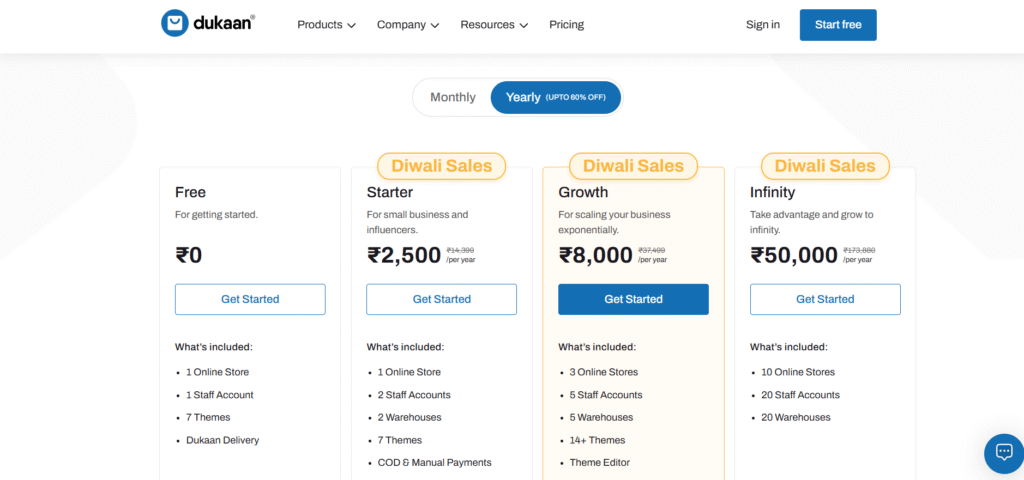
| Dukaan | Free plan available; Starter from ~₹14,399/year | Growth ~₹37,499/year | Infinity ~₹69,552/year | Official pricing page lists free and paid tiers; some sources show monthly equivalents |
| StoreHippo | Business ₹15,000/month | Enterprise ₹30,000/month | Platinum from ₹120,000/month | Annual term typically required; taxes extra |
Quick recommendations by scenario
Enterprise/headless omnichannel: StoreHippo.
Fastest MVP with UPI/GST: Dukaan or Instamojo.
Content + SEO store: WooCommerce.
Shopify India Pricing (Benchmark Before Comparing)
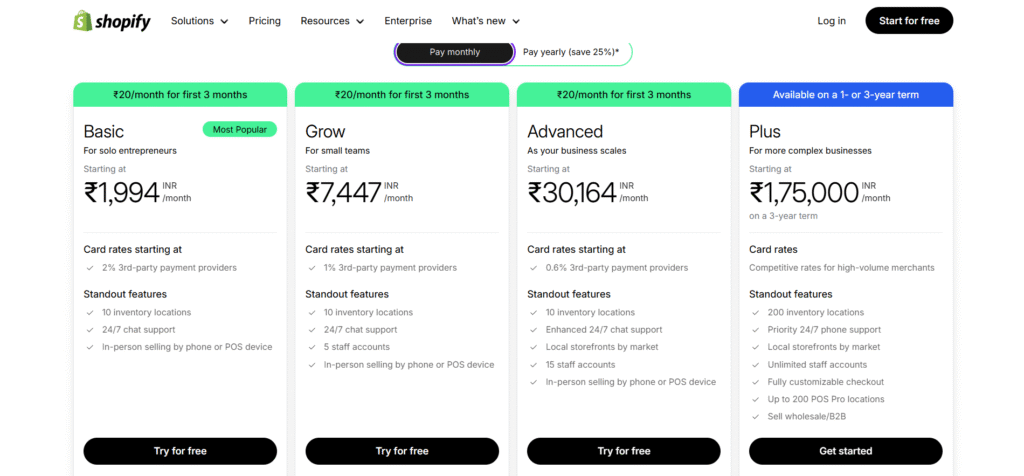
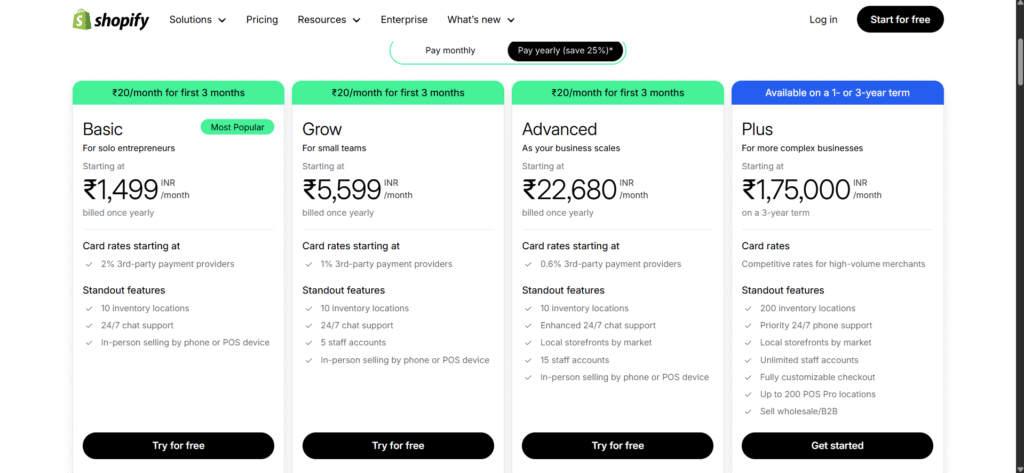
Shopify India pricing is the baseline most readers will use before comparing any “shopify alternatives india,” so it’s worth understanding current plans, promotions, and the extra costs Indian merchants face with third‑party gateways and apps. The official India page commonly promotes ₹20/month for the first 3 months, after which Basic is ₹1,499/month billed yearly, with higher tiers like Shopify and Advanced scaling features and fees.
Core plans and typical INR bands
- Starter: Often shown at ₹399/month for link‑based selling and social checkout—useful as a lowest‑cost entry, but not a full store experience.
- Basic: Promo ₹20/month for 3 months; then ₹1,499/month on annual billing, suitable for launching a standard storefront.
- Shopify (sometimes called Grow): Around ₹5,599/month on annual billing, adding more reports and staff capacity.
- Advanced: Around ₹22,680/month on annual billing, with the lowest third‑party gateway fee percentage and advanced reporting.
- Plus: Enterprise plan around ₹1,75,000/month on a multi‑year term, with deeper customization and priority support.
Monthly Plan:
Yearly Plan:
India‑specific cost factors
- Third‑party payment gateways: Shopify Payments isn’t available in India, so plan for third‑party gateway fees on top of subscription costs, especially if UPI is core to checkout.
- App and theme spend: Many must‑have features come via paid apps; premium themes add to total cost of ownership as you scale.
- International add‑ons: Duties, currency conversion, and cross‑border tools may add fees if selling overseas.
What this means for shopify alternatives india
- Benchmark monthly: Use Basic ₹1,499, Shopify ₹5,599, Advanced ₹22,680 as the monthly anchors when comparing India‑first platforms and total checkout costs.
- Model the gateway stack: If UPI and domestic wallets are critical, alternatives with native UPI might reduce friction and fees vs. Shopify + third‑party gateways.
- Factor apps vs. built‑ins: Alternatives with built‑in GST invoices, UPI, and omnichannel can offset monthly app spend common on Shopify.
Simple pricing reference table (INR)
How to Choose an Ecommerce Platform in India (UPI, GST, SEO, Scale)
Choosing the right platform for India comes down to payments, compliance, growth, and SEO. Framing decisions against “shopify alternatives india” helps map UPI support, GST workflows, and scale needs before committing to a stack. UPI usage continues to surge across urban India, while GST compliance (including e‑invoicing thresholds) affects day‑to‑day operations—both should be core selection criteria.
Payments: UPI-first and gateways
- Must-have: Native UPI and wallet support via Indian gateways like Razorpay, Cashfree, PhonePe, and Paytm to minimize checkout drop-offs and fees. Check official gateway integrations on the platform you choose.
- Reality check: There’s no GST on UPI transactions themselves; what matters is gateway fees and how they impact net margin. Verify UPI availability and settlement terms with your provider.
- Practical note for Shopify: UPI is enabled through third‑party gateways on Shopify’s integrations list; review provider docs for UPI and wallet coverage before finalizing. This is a critical benchmark when evaluating shopify alternatives india.
Compliance: GST invoicing and e‑invoicing
- GST basics: E‑commerce sellers must meet GST registration and compliance norms; platforms should support GST invoice formats, HSN/SAC, and tax rules at checkout.
- E‑invoicing: From 2023, e‑invoicing applies to businesses with turnover above ₹5 crore, with tighter reporting timelines from 2025; ensure your platform or POS stack supports IRN/QR generation where required.
- Why it matters for shopify alternatives india: India‑first platforms or plugins that automate GST and e‑invoicing reduce manual work and errors.
SEO and content stack
- Content-led growth: If organic search is key, prioritize platforms with strong blogging, schema, and performance controls, or plan a headless/front-end strategy for Core Web Vitals.
- App vs built‑in: Fewer SEO add-ons needed means simpler maintenance; check native support for redirects, sitemaps, structured data, image alt, and multilingual. This weighs into the “shopify alternatives india” comparison when evaluating WooCommerce vs SaaS options.
Scale and omnichannel
- Inventory and channels: Evaluate multi-warehouse, marketplace connectors, order orchestration, returns, and GST on multi-state operations as you scale.
- UPI at scale: Confirm gateway throughput, UPI intent flows on mobile, and reconciliation tools; these materially affect conversion and finance ops at higher volumes.
- Choosing among shopify alternatives india: Enterprise-leaning platforms with native omnichannel and India logistics/payment integrations reduce custom work later.
Decision checklist
Scale: Does it offer multi-location inventory, marketplace sync, and robust returns/exchange flows?
Payments: Does it natively support UPI, wallets, netbanking with your preferred gateway? Are settlement cycles and MDR clear?
Compliance: Can you configure GST rates, e‑invoice IRN/QR, and export GSTR-ready reports?
SEO: Are performance, schema, redirects, and blogging capabilities sufficient out of the box?
WooCommerce (WordPress): Best for Content + SEO Stores

WooCommerce is a strong choice for content-led commerce because it sits on WordPress, giving you granular SEO control while staying flexible for India-specific needs like UPI and GST. When evaluating shopify alternatives india, WooCommerce offers native WordPress SEO strengths, mature GST invoicing plugins, and straightforward UPI gateway integrations that fit Indian buyer behavior.
Why WooCommerce for SEO-first stores
- WordPress SEO foundation: Clean permalinks, schema support, and robust SEO plugins like Rank Math or Yoast give precise control over titles, meta, and structured data—ideal for content + product pages. As of 2025, WooCommerce adds product schema that can power rich results.
- Technical SEO flexibility: Control pagination, canonicals, category/tag architecture, and Core Web Vitals via theme and caching choices, making it easier to out‑optimize rigid SaaS stacks when targeting shopify alternatives india.
India-ready payments: UPI and gateways
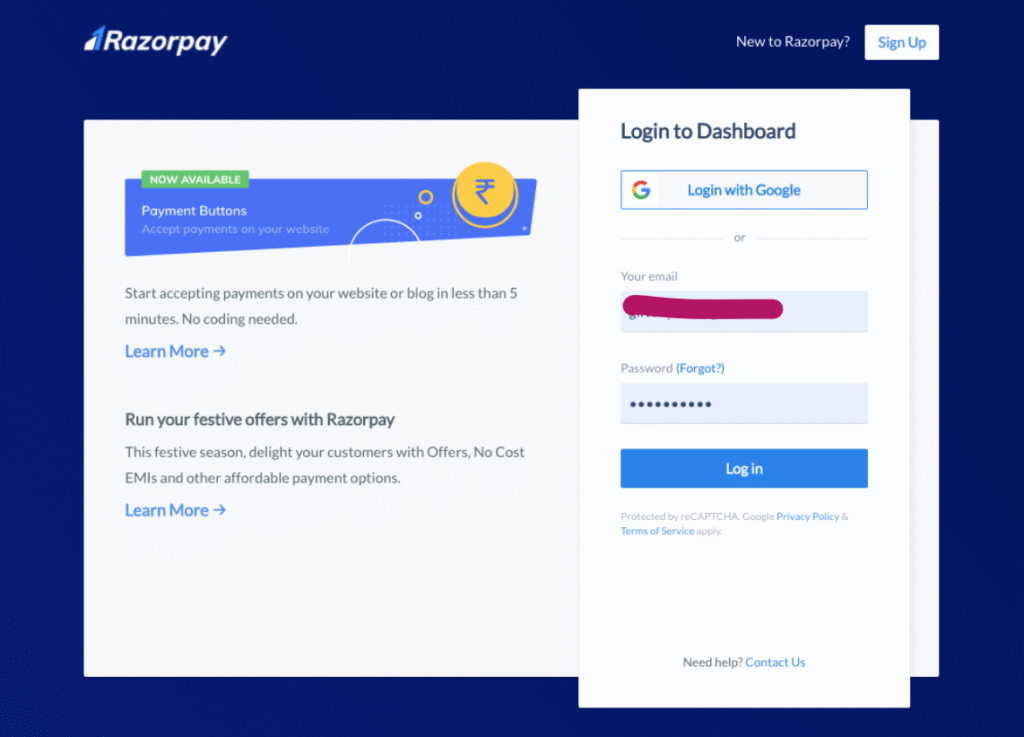
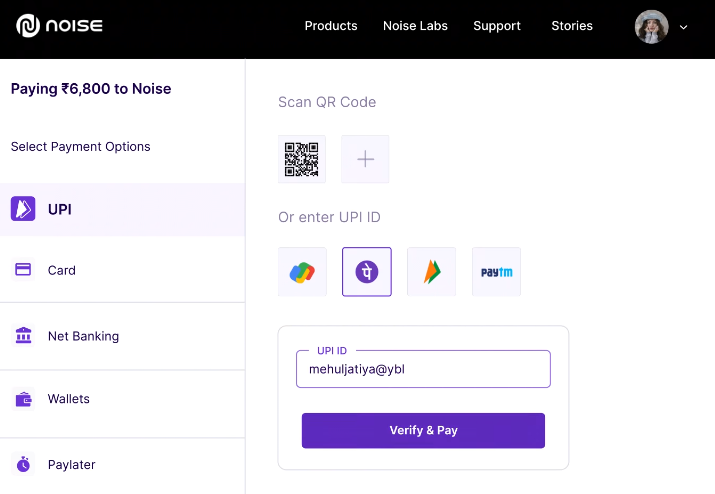
- UPI plugins and gateways: You can add UPI via official gateway plugins (Razorpay, Cashfree, PhonePe) or UPI QR flows; these reduce checkout friction and can improve conversion for Indian shoppers.
- Implementation options: Choose QR-based plugins for simple setups or full gateway integrations that auto‑confirm payments and update order status in WooCommerce.
Razorpay integration:
Cashfree Integration:
GST invoicing and compliance
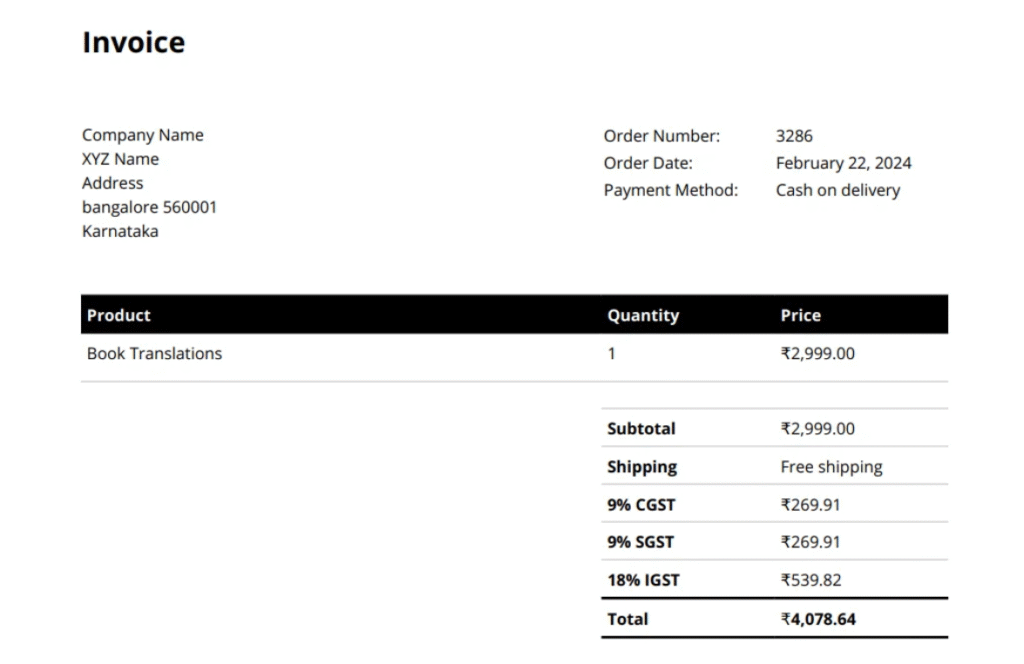
- GST plugins: Popular WooCommerce plugins handle CGST/SGST/IGST, HSN/SAC codes, GSTIN capture, and PDF invoices to simplify India compliance. This is a frequent requirement when comparing shopify alternatives india.
- E‑invoicing support: Some India-focused plugins add IRN/QR generation and e‑invoice workflows, helping larger stores meet 2025 thresholds.
Practical setup tips
- Theme and performance: Use lightweight themes, server-side caching, and a CDN to keep product/category templates fast for SEO and conversions.
- Payment stack: Pick an RBI‑compliant, UPI‑ready gateway with clear MDR, settlements, and refund handling; test via sandbox before going live.
- Tax stack: Enable WooCommerce taxes, configure classes, and map HSN/SAC at product level; use a reliable plugin for invoices.
When WooCommerce fits best
India-first operations: Brands needing UPI at checkout and GST/e‑invoicing without vendor lock-in—key drivers for shopify alternatives india choices.
Content-first D2C: Heavy blogging, long-form guides, and comparison content that funnels into product pages.
By pairing WordPress SEO strengths with UPI and GST plugins, WooCommerce delivers a flexible, India‑ready stack that often outperforms generic SaaS options for content-led growth—making it a compelling pick among shopify alternatives india.
BigCommerce: Scalable SaaS for Growing D2C Brands

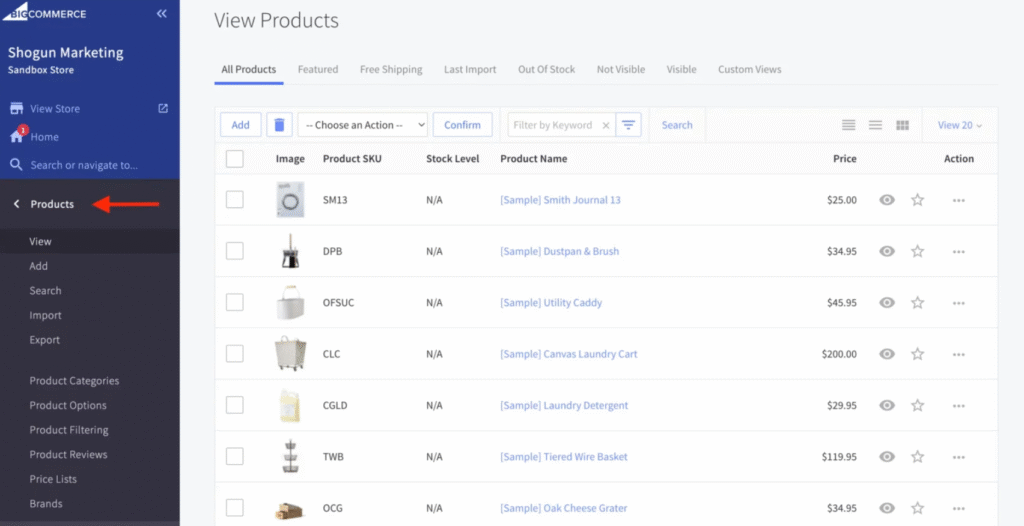
BigCommerce stands out as a scalable SaaS built for growth, with native multi-storefront, strong APIs for headless builds, and broad payment gateway coverage that suits India-focused D2C operations when benchmarking shopify alternatives india. It supports composable front ends, robust B2B features, and zero platform transaction fees across tiers, which helps total cost of ownership as volume increases.
Why BigCommerce for scaling
- Multi-storefront from one backend: Run country- or brand-specific storefronts from a single admin, useful for India + international expansion without duplicating systems.
- Headless and composable: API-first architecture, GraphQL Storefront, and integrations with modern frameworks enable performance-focused front ends and agile iterations.
- B2B readiness: Dedicated B2B features and the latest B2B Edition updates (buyer portal, MSF support) simplify wholesale and retail under one stack.
Payments for India
- Indian gateways: BigCommerce lists supported India payment gateways, enabling UPI via providers like Razorpay, PayU, Cashfree, CCAvenue, and Amazon Pay, aligning with local checkout norms. This is a key factor when comparing shopify alternatives india.
- Gateway strategy: As UPI dominates Indian digital payments, ensure chosen gateway covers UPI intent/collect, wallets, and fast settlements for scale.
Pricing snapshot
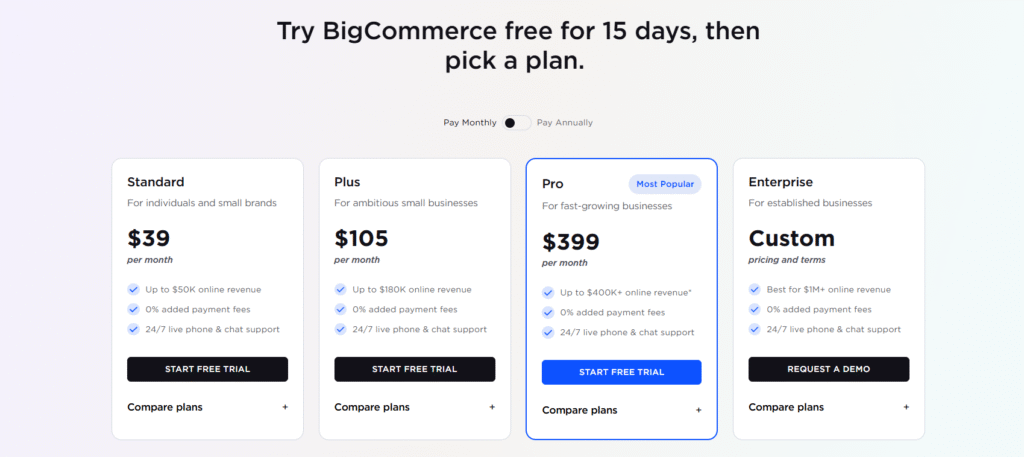
- Plans: Standard $39/mo, Plus $105/mo, Pro $399/mo, Enterprise custom; annual billing reduces effective rates. No platform transaction fees across plans.
- Sales thresholds: Automatic plan upgrades based on annual online sales caps help align features with growth, with Pro offering higher limits and add-on bands.
Implementation notes
- Go incremental: Many teams roll out headless in phases—start with critical landing pages, then PDP/PLP, then checkout—to de-risk replatforming.
- Performance-first: Use static generation, edge caching, and API response caching to lift conversions 15–30% in headless builds.
- Omnichannel: Leverage marketplace and social integrations from the same admin while keeping India-focused payments and tax handling consistent.
When BigCommerce fits best
D2C with B2B channels, requiring price lists, buyer portals, and account-based controls at scale.
Rapidly growing catalogs needing multi-storefront and reliable APIs for custom UX.
Brands pursuing headless or composable architectures without heavy lock-in, a frequent consideration in shopify alternatives india research.
For teams weighing shopify alternatives india, BigCommerce offers scale-friendly pricing, native multi-storefront, and India-compatible payments while keeping the door open to headless and B2B growth.
Wix eCommerce: Fast Design-Led Stores for SMBs
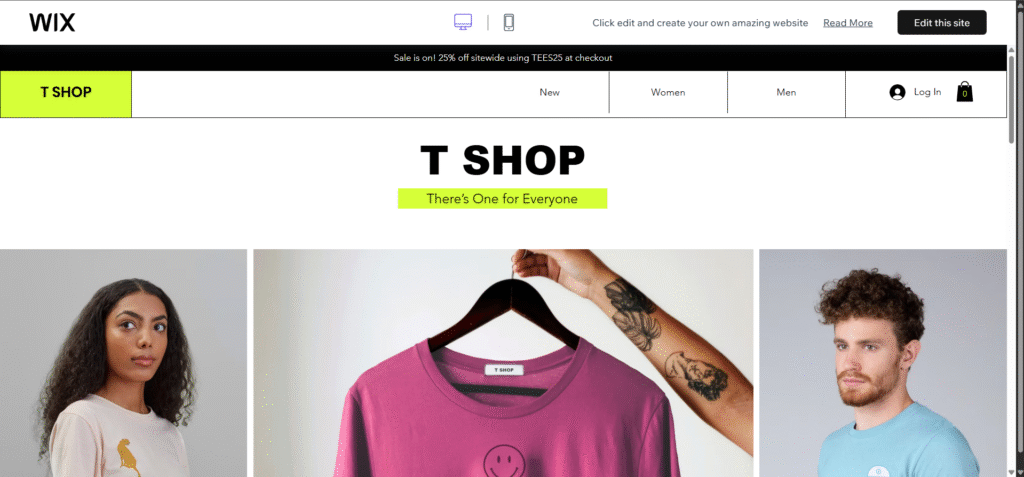
Wix eCommerce is ideal for SMBs in India seeking a fast, visually appealing online store with minimal technical complexity. Compared with other shopify alternatives india, Wix’s strength is its easy visual editor, mobile-ready templates, and local payment gateway options that help Indian sellers launch quickly and focus on brand story, not code.
Why Wix eCommerce works for SMBs
- Design-led approach: Wix offers over 500 free eCommerce templates spanning every major retail category. With drag-and-drop editing, built-in animation, mobile optimization, and custom font/image options, non-technical founders can build unique store designs with zero code.
- Fast go-live: Businesses can launch in days, not weeks. The intuitive dashboard covers catalog setup, shipping, SEO basics, and analytics, making it ideal for side hustles and emerging D2C brands targeting the shopify alternatives india keyword.
India-ready payments and prices
- Local gateways: Indian Wix stores can accept payments through providers like Razorpay, SabPaisa, CCAvenue, PayU, Nimbbl, and more, allowing for UPI, cards, wallets, and BNPL—a critical differentiator when reviewing shopify alternatives india for Indian markets.
- INR plans: Wix offers four India-specific plans (Light ₹199/mo, Core ₹399/mo, Business ₹799/mo, Business Elite ₹1,599/mo; all billed annually plus GST). Start-up sellers can begin on Core or Business, then upgrade as they grow.
- Simple billing: Annual payment is required, and GST is added at checkout; domain is bundled for first year, with 14-day money-back guarantee.
Limitations to be aware of
- App/store ecosystem: Wix’s app market is smaller than Shopify’s; some advanced automations or India-specific plugins may not be available yet.
- Large scale/complexity: High inventory, advanced customizations, or headless commerce needs are better served by BigCommerce or StoreHippo among shopify alternatives india.
When to use Wix
Early stage growth: Startups validating D2C ideas before planning for larger scale or custom build-outs.
Brand-first SMBs: Entrepreneurs and creators who care about site aesthetics and user experience over deep feature customization.
India D2C/retailers: Sellers wanting to accept UPI and local wallets easily without developer help.
StoreHippo: Headless and Omnichannel for India Enterprises
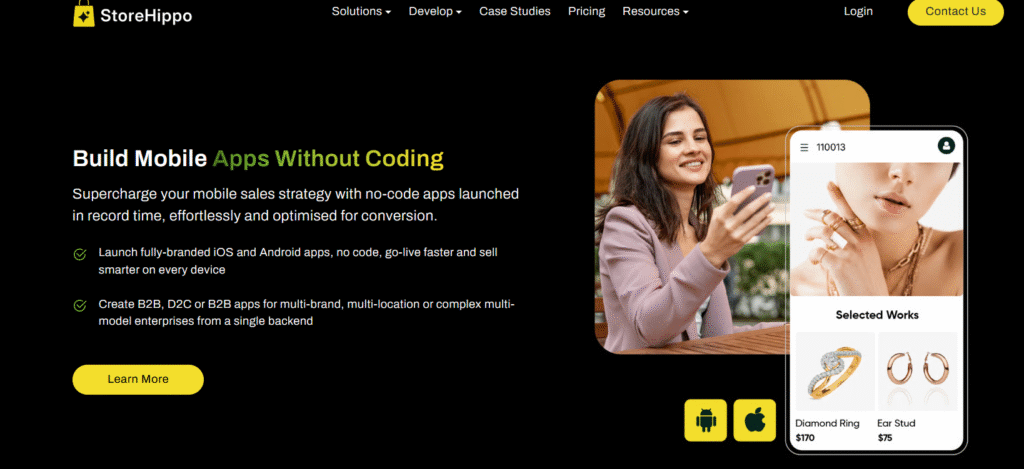
StoreHippo is built for India enterprises that need headless flexibility, omnichannel reach, and India‑ready payments at scale—key factors when shortlisting shopify alternatives india. Its microservices, API‑first, cloud‑native architecture supports multi‑store, marketplaces, hyperlocal, and B2B/B2C hybrids with mobile‑first PWAs and inbuilt app builders.
Why StoreHippo for enterprises
- Headless by design: Decoupled frontend and backend let teams ship custom experiences, adopt composable stacks, and personalize buyer journeys across channels without platform lock‑in.
- Omnichannel in one admin: Launch multiple touchpoints—web, mobile apps, marketplaces, social, hyperlocal—using the same backend logic and APIs, keeping inventory and CX consistent.
- Mobile‑first PWAs: Stores are PWAs by default, optimized for entry‑level devices and patchy networks; an inbuilt mobile app builder helps spin up apps for admins, vendors, and delivery staff.
India payments and checkout
- UPI and 60+ gateways: Integrates with leading India gateways such as Paytm, PayU, CCAvenue, Amazon Pay and more, enabling UPI, wallets, COD, and cards out of the box—critical for shopify alternatives india comparisons.
- No extra gateway lock‑ins: Public material highlights broad gateway coverage to match regional payment preferences and settlement needs.
Use-cases it handles well
- Multi‑seller marketplaces and dealer networks: Inbuilt vendor management, sub‑stores, and hyperlocal routing support complex India distribution models.
- Quick commerce and hyperlocal: Solutions tailored for under‑30‑minute deliveries with integrated delivery apps and location‑aware flows.
- B2B + D2C together: Price lists, buyer portals, and role‑based experiences align with enterprise channel mixes.
Pricing snapshot
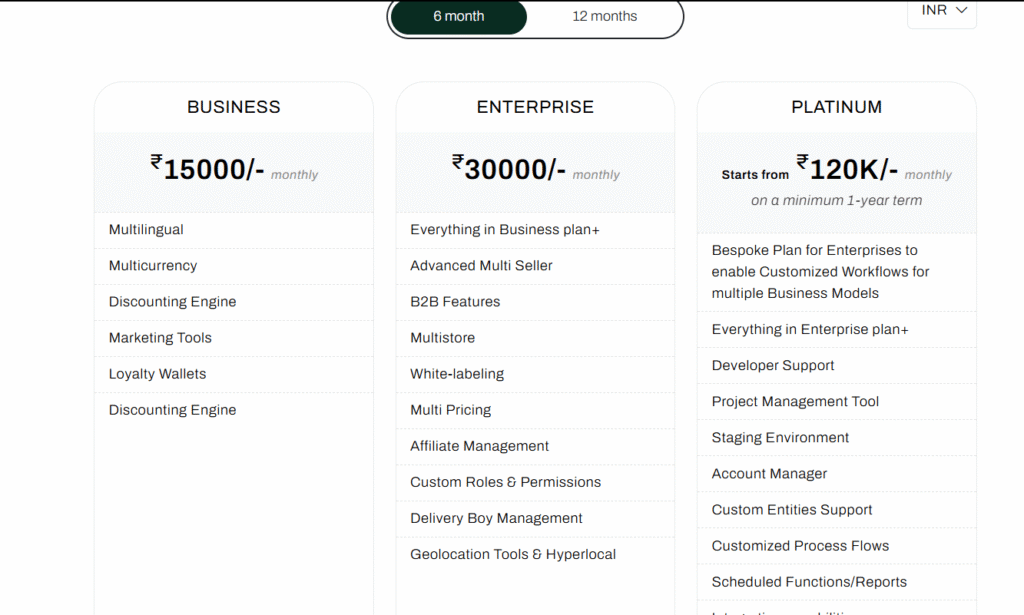
- Indicative public plans list Business at ₹15,000/month, Enterprise at ₹30,000/month, and Platinum from ₹120,000/month; confirm taxes and terms directly as enterprise quotes can vary.
Implementation tips
Optimize mobile UX: Leverage PWA features (add to home screen, offline caching) for conversions in bandwidth‑constrained regions.
Start with core channels: Launch web + marketplace connectors first, then layer mobile apps and hyperlocal flows to de‑risk go‑lives.
Standardize payments: Pick 1–2 India gateways that cover UPI intent, wallets, and BNPL, and test refunds/settlements early.
Dukaan: Quick Launch with UPI for Solo Sellers
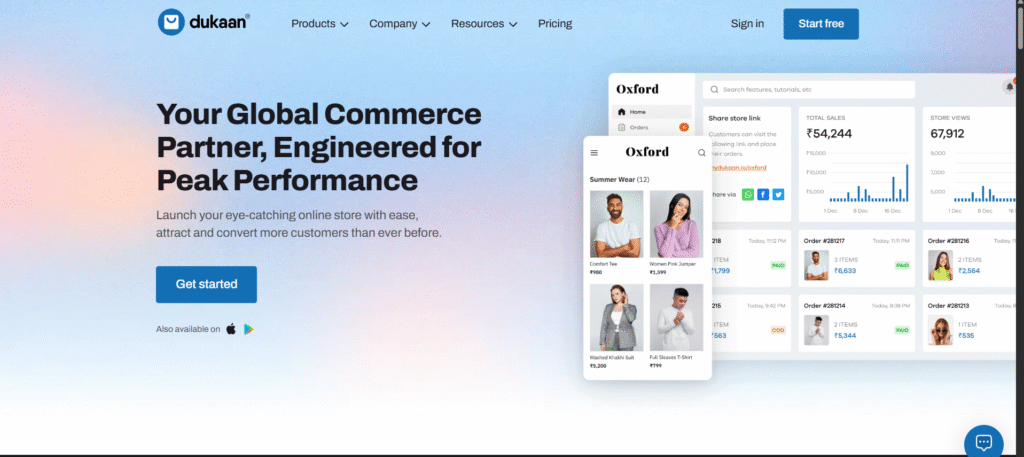
Dukaan makes it easy for solo sellers and small teams to launch fast with India-native payments, simple catalog tools, and low setup effort—making it a practical pick among shopify alternatives india. With built-in UPI via gateways and a mobile-first onboarding flow, most users can list products and start collecting payments in minutes.
Why Dukaan for quick launch
- Minimal setup: Guided onboarding, ready-made themes, and a clean dashboard help first-time sellers go live quickly without code. This speed-to-live is a key advantage when evaluating shopify alternatives india for MVPs.
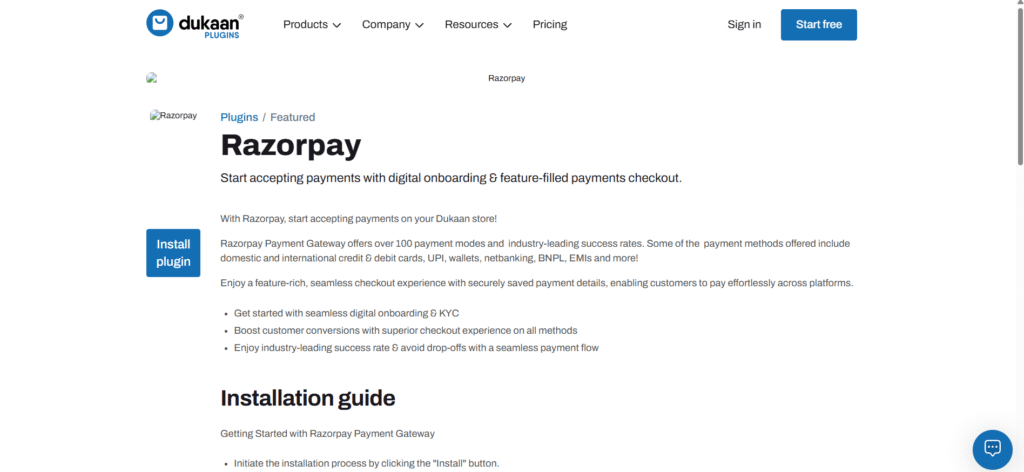
- UPI-ready payments: Official plugins like Razorpay enable UPI, cards, wallets, and BNPL; once connected, orders auto-update and settlements flow into your account.
- Focused feature set: Core essentials—catalog, coupons, basic shipping and order management—keep operations simple for solo founders.
Pricing snapshot (India)
- Public pricing typically includes a Free tier plus paid tiers such as Starter and Growth, with annual pricing commonly listed (e.g., Starter ~₹14,399/year; Growth ~₹37,499/year; Infinity higher). Always verify on the official pricing page before publishing.
- Practical takeaway for shopify alternatives india: Dukaan’s lower annual cost and straightforward stack can be attractive for lean sellers who prefer UPI-first checkout.
What to know about payments
- Gateway integrations: Razorpay is the default recommendation for India; it covers UPI, cards, wallets, netbanking, and EMI—ideal for local buyer preferences.
- Platform fees: Many comparisons note no extra platform-level transaction fee, so you mainly pay the gateway MDR; confirm current fee terms within your account.
Where Dukaan fits best
- Solo founders, creators, and hyperlocal sellers who want to validate demand quickly with UPI and COD, then iterate on catalog and offers.
- India-only focus, WhatsApp traffic, and social commerce flows where simple checkout beats complex customization—often the deciding factor in shopify alternatives india shortlists.
Limitations to consider
Theming and apps: Fewer customization options and plugins than enterprise SaaS or open-source stacks.
Advanced features: Internationalization, deep analytics, complex shipping logic, or extensive integrations may require stepping up to a more robust platform later.
For founders weighing shopify alternatives india, Dukaan offers the fastest path to a live store with UPI-native checkout and minimal overhead—ideal for testing and early growth before scaling needs become complex.
Instamojo: Creator-Friendly Storefront with India Payments
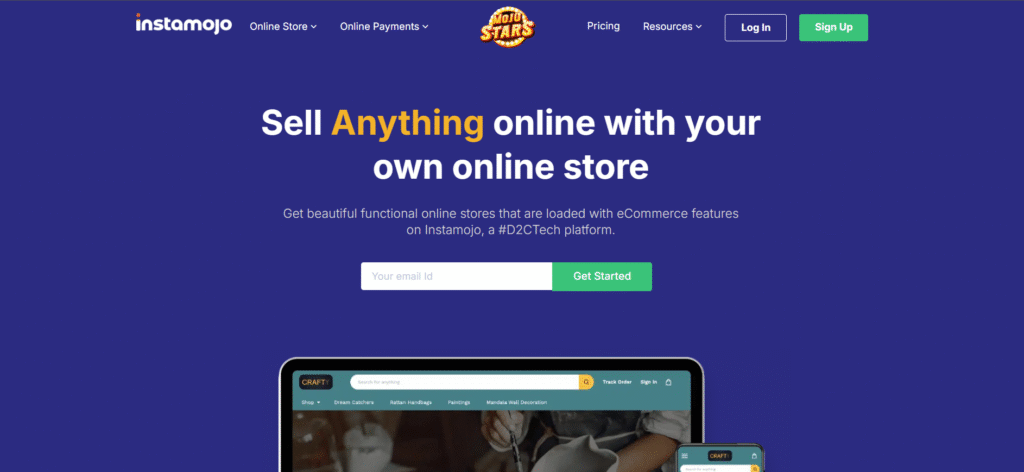
Instamojo is a creator‑friendly storefront and payment stack built for India, making it a practical choice in the landscape of shopify alternatives india. It combines a no‑code store builder, 100+ payment modes including UPI, and transparent INR pricing, so solo creators and SMBs can sell products, services, and digital goods with minimal setup.
Why Instamojo fits creators and SMBs
- Store + payments in one: Launch a branded online store, connect a domain, ship pan‑India, and collect payments without juggling multiple vendors—ideal for lean teams evaluating shopify alternatives india.
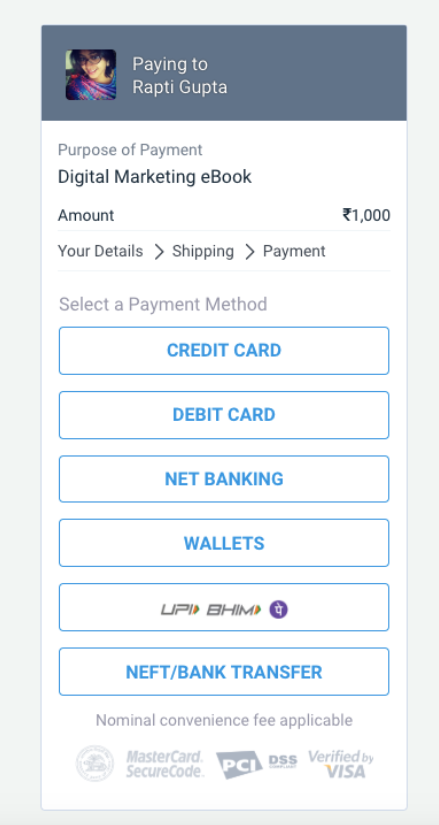
- 100+ payment modes with UPI: Support for UPI (intent and auto‑suggest), cards, net banking, wallets, EMI, and even NEFT via virtual accounts improves checkout success and reconciliation.
Plans and fees (India)
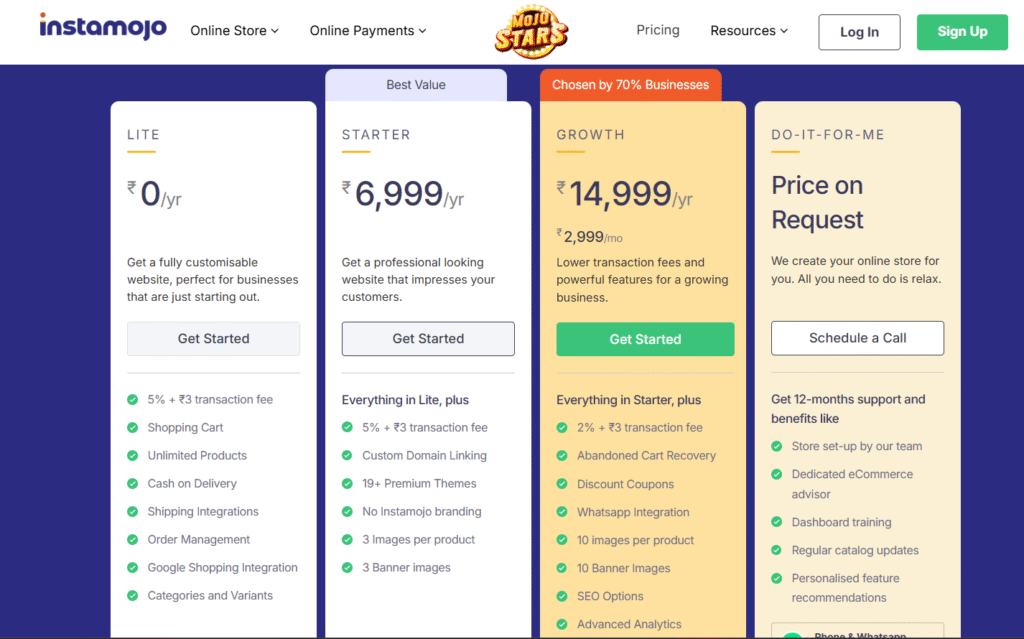
- Lite/BASIC: ₹0 per year with core storefront or Smart Pages/links; transaction fee typically 5% + ₹3 + GST. Good for testing and pre‑launch.
- Starter/PRO: From ₹6,999 per year for custom domain and branding; PRO offers 2% + ₹3 + GST on Smart Pages.
- Growth: ₹14,999 per year or ₹2,999 per month with lower 2% + ₹3 + GST transaction fee, plus abandoned cart recovery, coupons, WhatsApp, SEO, and advanced analytics.
- Tip: Use the fee calculator to model effective MDR and price products accordingly before choosing among shopify alternatives india.
Payments and checkout
- UPI flows that convert: UPI Intent opens the customer’s app directly; Auto‑suggest helps enter VPA faster—both reduce friction at checkout for Indian buyers.
- Collection flexibility: Use payment links, embedded buttons, and virtual account numbers for NEFT/IMPS with automatic reconciliation.
Feature highlights for creators
- Digital products and tickets: Sell files, workshops, and services from the same store with simple catalog and delivery flows.
- Marketing basics: Themes, coupons, email/SMS campaigns, tracking pixels, and analytics are available without heavy add‑ons—handy when choosing shopify alternatives india for simple stacks.
Limitations to consider
- Advanced customization: Deep theming, headless front ends, or complex apps are limited compared with enterprise SaaS and open‑source options.
- Transaction fees: Even on paid plans, per‑order fees apply; benchmark against expected AOV and compare with other India‑first platforms.
Where Instamojo fits best
SMBs wanting a fast launch and simple operations, with plans to scale later if complexity grows—common in shopify alternatives india journeys.
Solo creators, coaches, and micro‑brands selling digital goods, services, or small catalogs with heavy UPI usage.
For creators and SMBs comparing shopify alternatives india, Instamojo offers a low‑friction path to sell online with UPI‑first checkout, INR plans, and just‑enough tools to validate and grow.
Fynd Platform: No-Code Store Builder for Indian Retailers
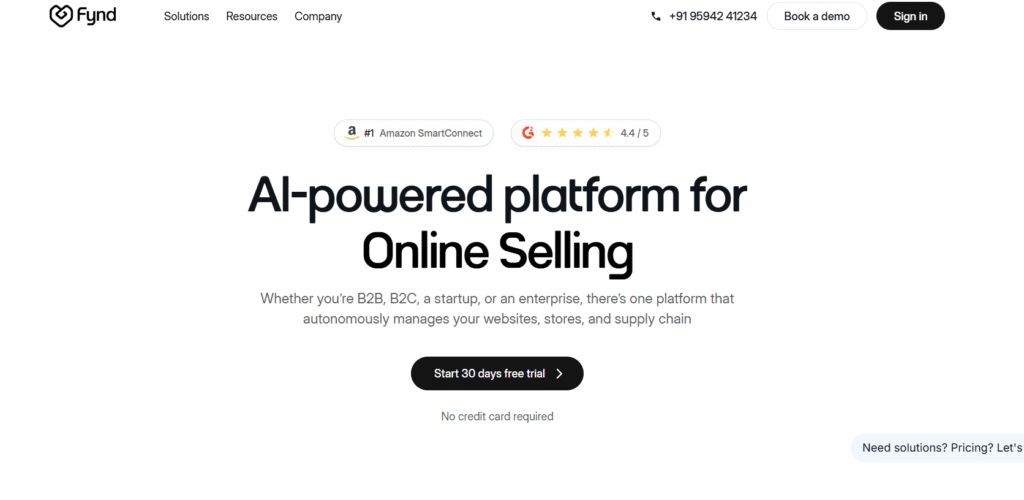
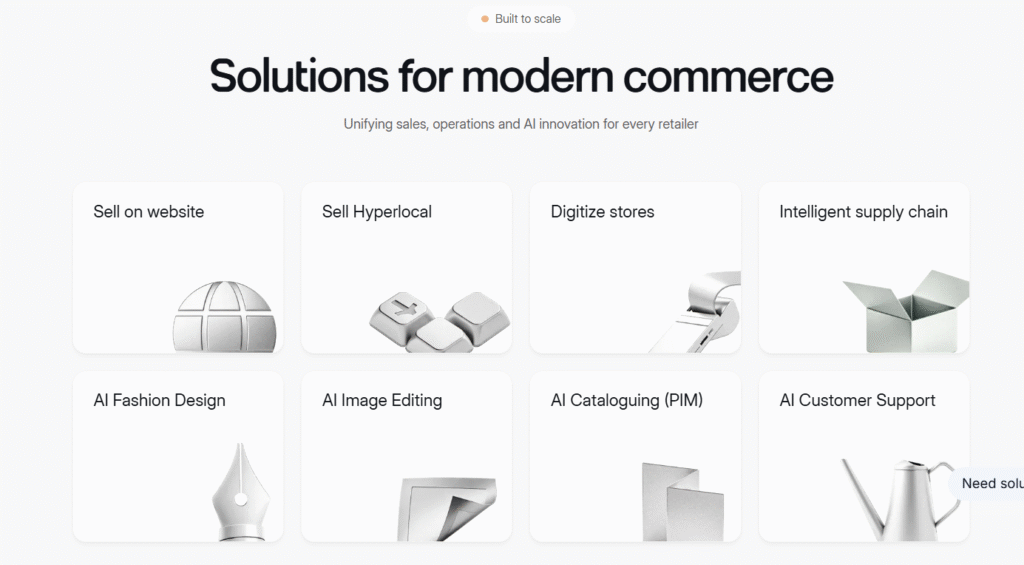
Fynd Platform is a no‑code store builder designed for Indian retailers who want fast go‑lives, built‑in payments, and omnichannel capability without managing code—making it a practical option to consider among shopify alternatives india. It bundles storefront, POS, logistics, marketing, and marketplace integrations under one stack, with plan tiers that include essentials like SSL, custom domain, and analytics.
Why Fynd for no‑code stores
- No‑code storefront: Drag‑and‑drop themes and 50+ extensions help launch branded stores quickly, while keeping the stack maintenance‑free for small teams evaluating shopify alternatives india.
- Unified commerce: One platform covers D2C website, POS, OMS, logistics, and marketplace integrations, reducing the need for separate tools and complex integrations.
India‑ready payments and compliance
- Payments and UPI: Fynd supports payment configuration for India, including Razorpay and UPI in billing and checkout settings, aligning with local buyer expectations.
- Taxes and GST: Storefront settings allow secure checkout and tax configuration; paired with unified inventory and OMS, this simplifies compliance vs pieced‑together stacks when weighing shopify alternatives india.
Plans and pricing (indicative)
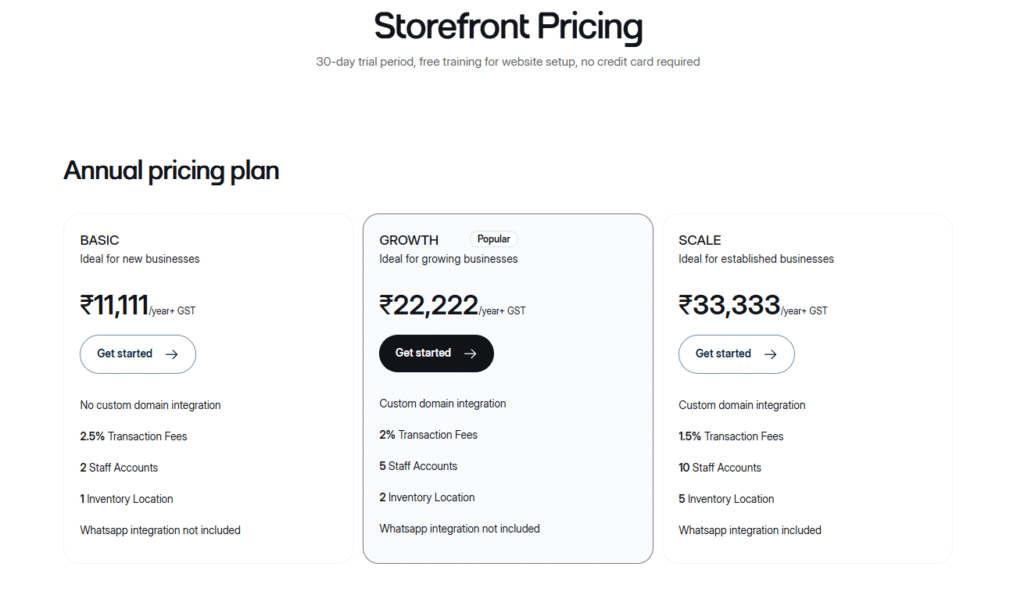
- Storefront pricing: Annual plans commonly listed at ₹11,111/year, ₹22,222/year, and ₹33,333/year (plus GST) with decreasing transaction fees of 2.5%, 2%, and 1.5% respectively; check the live pricing page for the latest.
- All‑in features: Plans include custom domain, SSL, mobile optimization, role‑based staff access, insights, and expert setup options to accelerate go‑live.
- Older blog reference: A 2025 post cites Standard ₹599, Professional ₹1,499, Premium ₹2,499 with 2%–1.5% fee bands; always validate against the official pricing page.
Growth and omnichannel features
- Multi‑location and quick commerce: Recent updates highlight support for multi‑seller, hyperlocal/quick commerce, subscription orders, slot‑based deliveries, and AI chatbots—useful for India retail beyond a basic catalog.
- Scale stats and brands: Public materials position Fynd as powering high scale and enterprise retail use cases across categories, with fast go‑lives and composable options.
When Fynd fits best
Teams exploring shopify alternatives india who prefer annual INR pricing, lower integration effort, and bundled essentials over managing plugins.
Indian retailers wanting a single vendor for storefront, POS, and logistics with simple UPI‑ready checkout.
Zepo and Kartify: Managed Implementations for Indian Brands
Zepo and Kartify are best viewed as managed, India‑first implementations rather than DIY tools, which is why they often appear in shortlists of shopify alternatives india for brands that want hand‑holding, local integrations, and faster outcomes without building large in‑house teams. Both focus on delivering a ready, conversion‑tuned stack with Indian payments and logistics baked in, but they target slightly different needs and budgets.
What “managed implementation” means
- End‑to‑end help: Strategy, storefront setup, migrations, integrations, performance tuning, and ongoing ops support handled by a vendor or partner, not just software access—appealing for Indian brands comparing shopify alternatives india that reduce build risk.
- Local integrations: India payment gateways, COD/RTO controls, and subsidized logistics options are prioritized to lift conversions and cut failed deliveries.
Zepo overview
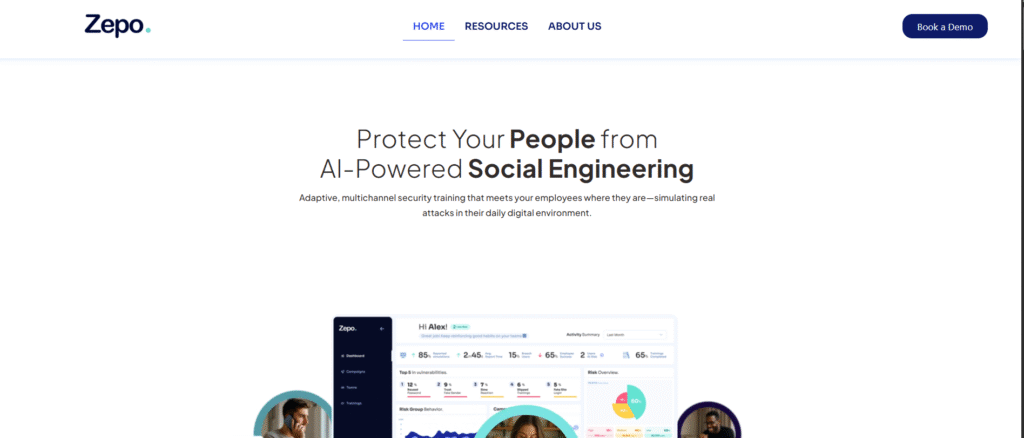
- India‑focused stack: Zepo has historically offered a SaaS storefront with templates, India gateway options, and a strong logistics layer via Zepo Couriers for aggregated rates and multi‑carrier shipping.
- Typical pricing cues: Public pages and third‑party references show packaged logistics pricing and older plan comparisons; confirm current store plan rates and inclusions directly with Zepo before publishing.
- Fit: Good for SMB brands that want a bundled India stack with shipping aggregation and a familiar SaaS storefront experience when choosing shopify alternatives india.
Kartify overview (by ANS Commerce)
- Fully managed D2C platform: Cart, checkout, and integrations tailored per brand with a strong focus on conversion optimization, performance, and integrations with solutions like GoKwik for RTO reduction and one‑click checkout.
- Who uses it: Enterprise and high‑growth D2C brands across fashion, beauty, and lifestyle; it’s positioned as bespoke and scalable rather than template‑only.
- Fit: Best when you want a partner running your D2C engine end‑to‑end—common in enterprise evaluations of shopify alternatives india.
Payments, UPI, and compliance
- Gateways: Expect support for major India gateways (Razorpay, PayU, CCAvenue, PhonePe, Amazon Pay) with UPI, cards, wallets, and BNPL to match Indian checkout norms. Verify UPI coverage and MDR with the vendor.
- GST realities: UPI transactions themselves aren’t taxed; GST can apply to gateway service fees, so model net margins and COD/RTO costs in your business case.
Pricing signals and procurement tips
- Zepo: Look for bundled courier pricing and negotiated shipping slabs; storefront plan details may be quote‑based—request a current rate card.
- Kartify: Pricing is typically custom and tied to managed scope and performance commitments; ask about RTO reduction tools, marketing automation, and SLA coverage.
- For a “shopify alternatives india” comparison, evaluate total cost including MDR, RTO savings, logistics subsidies, and team time saved.
Where they fit best
Kartify: Established or rapidly scaling D2C brands seeking a partner to own conversion, performance, and operations with enterprise‑grade integrations.
Zepo: SMBs needing an India‑ready storefront plus aggregated logistics without building a tooling stack from scratch.
Zopping: Emerging India-Focused Alternative
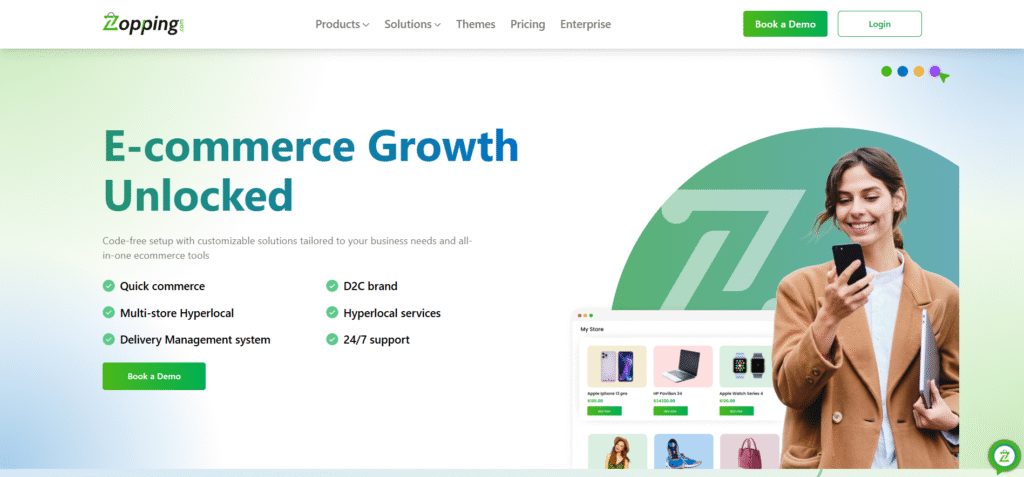
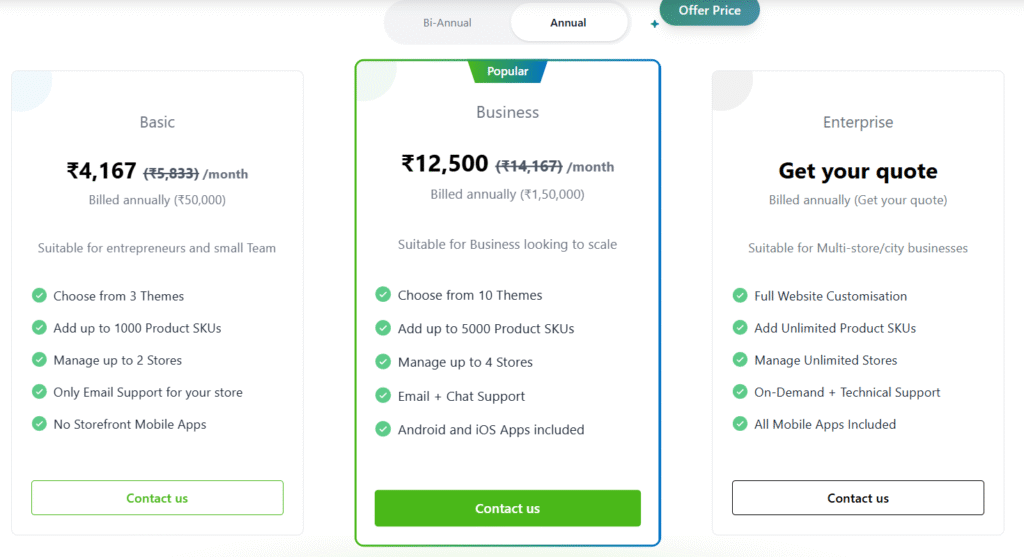
Zopping is an emerging, India‑first ecommerce platform aimed at SMBs and D2C sellers who want an all‑in‑one setup with UPI, GST, logistics, and multi‑channel sales out of the box—making it a credible pick when evaluating shopify alternatives india. It emphasizes “zero commission” pricing, daily payout tracking, built‑in GST/e‑invoicing, and quick setup of both website and mobile apps tailored to local buyer behavior.
What makes Zopping different
- India‑ready by default: UPI, wallets, net banking, GST invoicing with HSN mapping, and IRP‑compliant e‑invoices are built in, reducing reliance on third‑party plugins or custom work common with generic platforms.
- Multi‑channel from day one: Sell on Amazon, Flipkart, Instagram, and WhatsApp with integrated listings and payout tracking, which is helpful for small teams comparing shopify alternatives india.
- Website + mobile apps: Launch a branded store and Android/iOS apps instantly for mobile‑first audiences without hiring developers.
Pricing and who it fits
- Indicative pricing: Public references cite plans starting around ₹2,917/month with no per‑sale commissions and transparent inclusions; verify current INR plans on the official page before publishing.
- Best for: Indian entrepreneurs, local shops, and D2C brands seeking a low‑complexity stack with India payments, GST, and logistics included—often the deciding factors in shopify alternatives india choices.
Payments and logistics
- UPI‑first checkout: Works with major Indian gateways for UPI, cards, wallets, and net banking, plus COD flows aligned to local buyer expectations.
- Shipping integrations: Connect to partners like Delhivery and Shiprocket, manage COD remittances, and track returns from one dashboard.
Limitations to note
Enterprise customizations: Designed for SMBs to mid‑market; very complex, global enterprise cases may outgrow defaults.
App ecosystem: Fewer third‑party apps and limited global tooling compared to Shopify/WooCommerce; focus is India operations over deep custom stacks.
Comparison Table: Features, UPI/GST, and INR Pricing
Here’s a concise, India‑focused comparison to benchmark leading platforms against “shopify alternatives india.” Verify live pricing on official pages before publishing, as promos and tiers change frequently.
Comparison table: features, UPI/GST, INR pricing
How to use this table
- Shortlist by stage: MVPs gravitate to Dukaan/Instamojo; content‑led growth to WooCommerce; scale and omnichannel to BigCommerce/StoreHippo; managed builds to Kartify/Zepo; emerging all‑in‑one to Zopping.
- Normalize costs: Always include gateway MDR, app/plugin fees, shipping/RTO costs, and team time when benchmarking “shopify alternatives india.”
Migration Tips: Moving from Shopify to an India-First Stack
A smooth migration from Shopify to an India‑first stack comes down to clean data export, SEO parity, UPI‑ready payments, and GST workflows. Treat this as a phased project: clone your catalog and URLs, stand up UPI/GST on the new stack, run parallel tests, and only then flip DNS—especially when optimizing for “shopify alternatives india.”
1) Scope and choose the target stack
- Pick the platform by needs: WooCommerce for content/SEO control, BigCommerce/StoreHippo for scale/omnichannel, Fynd/Dukaan/Instamojo for faster go‑live—typical patterns seen when weighing shopify alternatives india.
- Inventory and ops audit: Map SKUs, options/variants, bundles, warehouses, COD, returns, and RTO rules so the new platform replicates critical workflows.
2) Export clean data from Shopify
- Use Shopify admin exports for products, customers, and orders; for large catalogs, use specialized tools to preserve metafields, collections, and redirects in bulk.
- Inventory exports: Export inventory by location to avoid stock drift during cutover; verify CSV headers and formats before import.
3) Preserve SEO and URL structure
- Match slugs and collections where possible; generate 301 redirects for changed paths to protect rankings for “shopify alternatives india” and other target pages.
- Migrate on‑page SEO: Titles, meta, schema, alt text; re‑submit sitemaps post‑launch and monitor coverage and Core Web Vitals.
4) Stand up UPI‑ready payments
- Choose an India gateway with UPI intent/collect, wallets, and netbanking; complete KYC and sandbox tests, then implement webhook callbacks and order status updates.
- Test payment flows: Validate UPI success rates, refunds, partial captures, and settlement timelines before cutover.
5) Configure GST and invoicing
- Set tax classes, HSN/SAC, CGST/SGST/IGST rules; enable GST invoice PDFs and, if applicable, e‑invoicing with IRN/QR to meet 2025 thresholds.
- Export tax reports: Confirm the new stack can produce GSTR‑ready reports and reconcile gateway fees that may attract GST.
6) Import and validate on staging
- Import products, customers, orders into the target platform; spot‑check variant pricing, stock, images, and downloadable files.
- Checkout rehearsal: Place end‑to‑end test orders across UPI, cards, COD; verify emails/SMS, GST invoices, and webhook updates.
7) Redirects, analytics, and tags
- Upload 301 redirects in bulk; wire up GA4, pixels, and server‑side events; verify e‑commerce events and funnel steps match historical reporting.
- Monitor 404s: Crawl staging and post‑launch to fix broken links quickly.
8) Parallel run and cutover
- Freeze catalog edits and inventory deltas; shorten DNS TTLs; plan a low‑traffic launch window; keep the Shopify store on password mode with maintenance messaging.
- Go live and monitor: Track conversion, UPI success, refund workflows, and error logs for 72 hours; roll back only if payment or SEO issues are critical.
9) Tooling to speed up migration
Bulk export/import helpers: Use enhanced product export/import tools when native CSVs fall short, especially for metafields and redirects.
Guided migrations: Official and third‑party step‑by‑steps can reduce errors when moving to WooCommerce or other targets.
Conclusion
A smart choice among shopify alternatives india comes down to matching your stage, budget, and India-first needs: UPI at checkout, GST/e‑invoicing, and room to scale without replatforming. For MVPs and creators, Dukaan or Instamojo get you selling fast with UPI; for content‑led growth, WooCommerce pairs WordPress SEO with India plugins; for scale, BigCommerce and StoreHippo bring multi‑storefront, headless, and omnichannel; meanwhile Fynd streamlines no‑code launches, and Zepo/Kartify provide managed builds, with Zopping emerging as a low‑lift India‑ready option.
Actionably, benchmark total cost of ownership against Shopify India’s bands—subscription, gateway MDR without Shopify Payments, and must‑have apps—then compare like‑for‑like on INR pricing, UPI success rates, GST workflows, and support quality. This keeps “shopify alternatives india” comparisons fair and focused on checkout conversion and compliance, not just sticker price.
If a migration is on the roadmap, protect SEO with clean exports and 301s, stand up UPI and GST on staging, run parallel tests, and cut over during low traffic with monitoring—this reduces risk while unlocking the India‑first stack advantages that motivated your search for shopify alternatives india in the first place.