

Table of Contents
Coursera Reviews: What US Learners Actually Want to Know
Here’s the problem: most Coursera reviews online feel either too positive or too harsh. Some praise Coursera like it’s flawless. Others treat one bad experience like a universal truth.
The truth is, US learners want something simple: Is Coursera worth it for me in 2026? And if yes, which programs actually help with careers, job interviews, or promotions?
This guide breaks down everything using real data, real user feedback, and updated pricing — plus clear comparisons with Udemy, edX, LinkedIn Learning, and Skillshare.
If you’re looking for honest, research-backed Coursera reviews, you’ll get them here.
What Is Coursera? A Quick Overview
Coursera is an online learning platform that partners with top universities and major companies to produce professional courses and certificates.
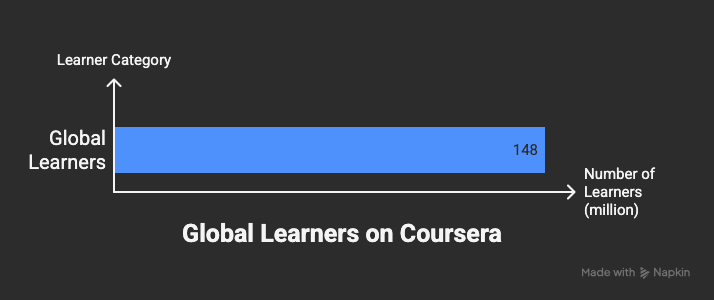
According to the 2024 Coursera Impact Report, the platform has grown to more than 148 million learners globally, with millions of active users in the US alone (Coursera Impact Report).
Coursera offers:
- Standalone courses
- Career certificates
- Specializations
- Guided projects
- Professional tracks (Google, IBM, Meta, Intuit, Salesforce)
- Full bachelor’s and master’s degrees from accredited universities
Why US learners gravitate toward Coursera:
- Employer-recognized certificates
- Strong tech and business programs
- Flexible timelines
- Option to audit courses for free
Coursera’s structure looks and feels like traditional education, but far more flexible.
Coursera Pricing in 2026 (US Breakdown)
Pricing is often the first thing people look for when searching Coursera reviews, so let’s break it down clearly.
✔ Coursera Plus (Best for Frequent Learners)
- Annual: $399/year
- Monthly: $59/month
- Includes unlimited access to 7,000+ courses, certificates, and specializations
- Good for learners who want multiple programs in a year
Source: Coursera Plus
✔ Individual Courses
- Free to audit (video lessons included)
- Certificate price: $49–$79
✔ Professional Certificates (Google, IBM, Meta, etc.)
- Subscription: $39–$79 per month
- Typical completion time: 2–5 months
✔ MasterTrack and Degree Programs
These are university-issued and cost significantly more.
- Certificates: $2,000+
- Bachelor’s degrees: $9,000–$25,000
- Master’s degrees: $9,000–$23,000+
Example: University of Illinois iMBA, around $23K (UIUC iMBA).
Bottom line: Coursera is affordable for certificate-level learning, but the degree programs match traditional tuition ranges.
Coursera Reviews: What Real Users Are Saying
To give you a balanced view, here’s what real learners are posting publicly.
✔ Trustpilot Reviews
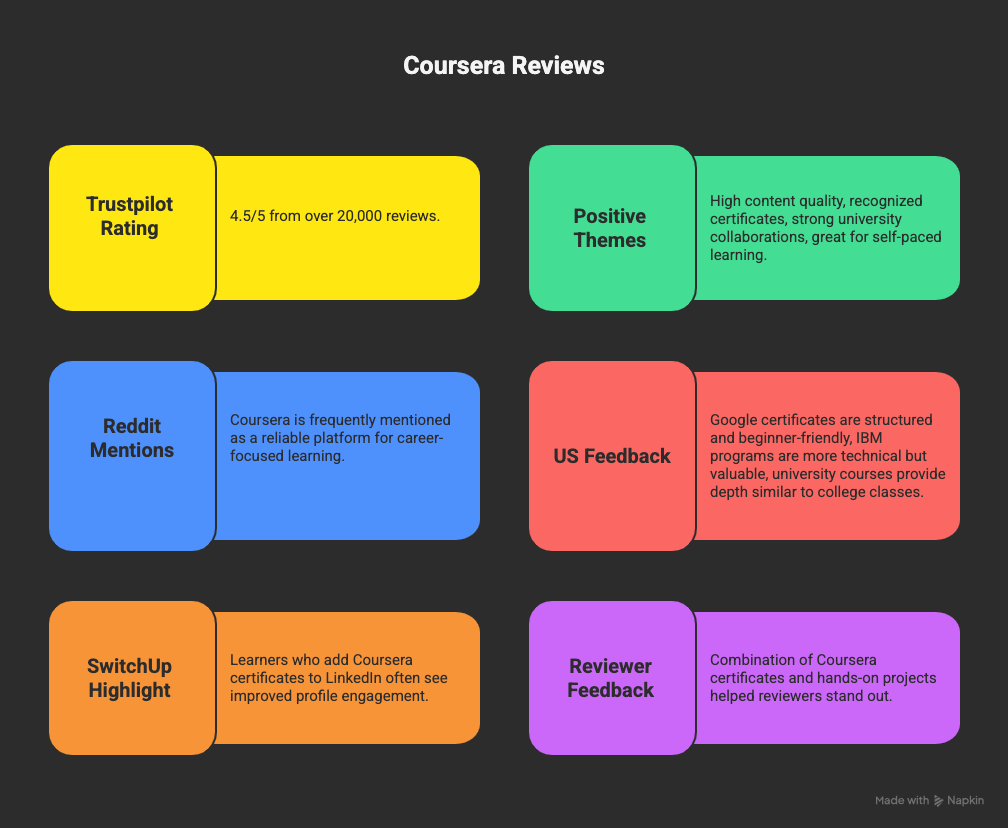
- Rating: 4.5/5 from 20,000+ reviews
- Source: Trustpilot
Top positive themes:
- High content quality
- Recognized certificates
- Strong university collaborations
- Great for self-paced learning
Common complaints:
- Customer support response times
- Confusion over refunds
- Course deadlines can feel strict in some programs
✔ Reddit Feedback
Reddit users frequently mention that Coursera is one of the most reliable platforms for career-focused learning.
Typical US-based feedback:
- Google certificates are structured and beginner-friendly
- IBM programs are more technical but valuable
- University courses provide depth similar to college classes
✔ Career-Focused Reviews (SwitchUp & CourseReport)
Platforms like SwitchUp highlight that learners who add Coursera certificates to LinkedIn often see improved profile engagement.
Source: SwitchUp
Many reviewers said the combination of Coursera certificates + hands-on projects helped them stand out.
Pros and Cons of Coursera
A balanced part of any Coursera reviews guide is a clear pros and cons table.
| Pros | Cons |
|---|---|
| Courses created by universities and leading tech companies | Some degrees are pricey |
| Flexible deadlines | Support responses can be slow |
| Recognized certificates on LinkedIn | Group projects vary in quality |
| Affordable career certificates | Monthly subscription can add up if you take too long |
| Strong mobile learning app | Not ideal for people who want live coaching |
Are Coursera Certificates Respected by US Employers?
Short answer: yes, especially in tech, business, and data.
According to the 2024 LinkedIn Workplace Learning Report, US employers increasingly look for proven skill-building programs instead of only degrees (LinkedIn Learning Report).
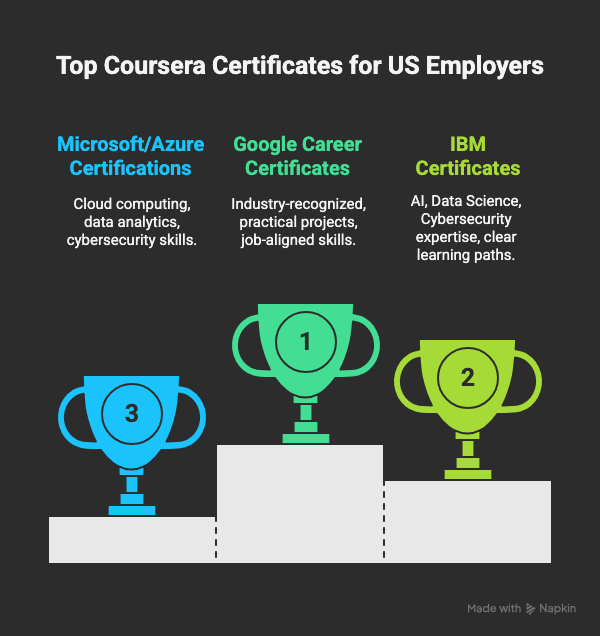
Programs that stand out most to US hiring managers:
- Google Career Certificates (IT Support, Data Analytics, UX Design)
- IBM (AI, Data Science, Cybersecurity)
- Microsoft/Azure certifications
- Meta (Social Media Marketing)
Why US employers value these:
- Industry-recognized brands
- Practical projects
- Job-aligned skills
- Clear learning paths
When Coursera certificates help most:
- Switching careers into IT, data analytics, cybersecurity, UX design
- Moving into entry-level tech roles
- Adding portfolio projects
When they matter less:
- Medical roles
- Legal professions
- Licensed financial fields
Best Coursera Courses & Categories (2026)
US learners gravitate toward specific categories that lead to career growth. Here’s what stands out.
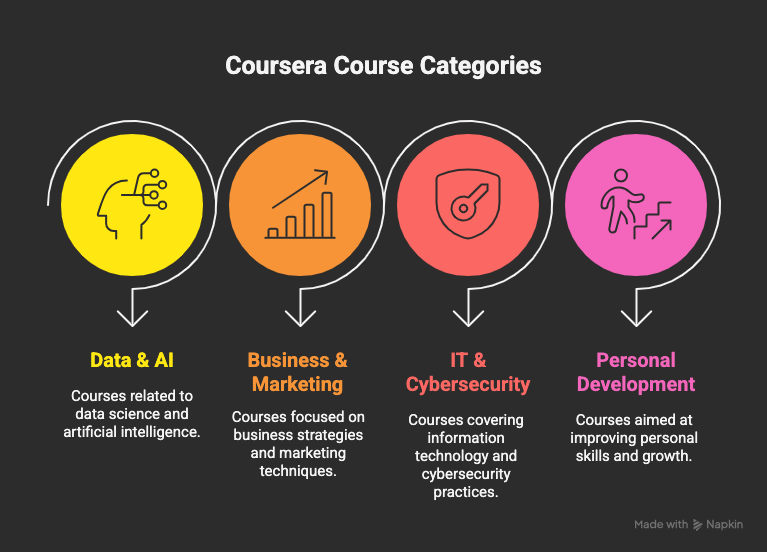
1. Data & AI
These courses consistently rank in top Coursera reviews:
- Google Data Analytics Certificate (Google via Coursera)
- IBM AI Engineering
- DeepLearning.AI Machine Learning Specialization
- Andrew Ng’s Machine Learning (classic, still huge)
These programs are popular because US job markets in data and AI continue to grow.
2. Business & Marketing
Strong choices for US professionals:
- Wharton Business Foundations
- Yale’s Financial Markets
- Meta Social Media Marketing
- Illinois iMBA courses
3. IT & Cybersecurity
Courses that frequently show up in US Coursera reviews:
- Google IT Support Certificate (one of Coursera’s biggest successes)
- IBM Cybersecurity Analyst
- Microsoft Azure Fundamentals
4. Personal Development
These aren’t job-focused but extremely popular:
- The Science of Well-Being (Yale)
- Learning How to Learn (UC San Diego)
Coursera vs Alternatives (2026 Complete Comparison)
A good Coursera reviews article must compare alternatives. Here’s the honest breakdown.
Coursera vs Udemy
- Udemy is cheaper and offers quick tutorial-style lessons.
- Coursera offers structured programs backed by universities.
- Udemy courses vary widely in instructor quality.
- Coursera has more credibility for resumes.
Best for: Learners who want verified certificates → Coursera.
Coursera vs edX
- edX has strong university partnerships like Harvard and MIT.
- Coursera offers more career-oriented certificates (Google, IBM, Meta).
- edX MicroMasters programs are strong but expensive.
Best for: Career pathways → Coursera.
Coursera vs LinkedIn Learning
- LinkedIn Learning focuses on short professional development courses.
- Coursera provides deeper, structured programs with assessments.
- LinkedIn is great for soft skills.
Best for: Technical or job-aligned learning → Coursera.
Coursera vs Skillshare
- Skillshare is great for creative fields (design, illustration, photography).
- Coursera dominates in business, tech, and data.
Best for: Career building → Coursera.
Who Should Use Coursera, and Who Should Skip It
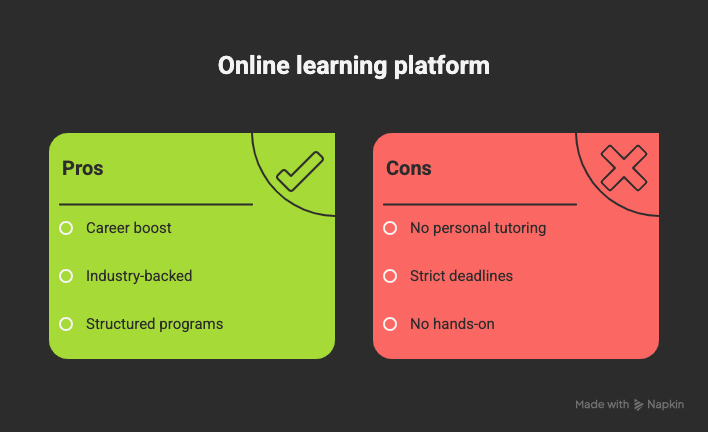
Great for:
- Career changers
- US students preparing for tech or data jobs
- Professionals needing certificates for promotions
- Job seekers who want accredited or industry-backed learning
- Learners who want structured programs
Not ideal for:
- People who want extremely short lessons
- Learners who need personal tutoring
- Anyone who dislikes deadlines
- Those who prefer hands-on classroom environments
Final Verdict: Is Coursera Worth It in 2026?
If you’re looking for respected certificates, structured learning paths, and courses designed by real universities and major tech companies, Coursera remains one of the strongest platforms for US learners.
Based on thousands of Coursera reviews, the platform consistently delivers value in tech, business, and data, especially when paired with projects and LinkedIn optimization.
For most learners, Coursera is absolutely worth it in 2026. Just choose programs that match your goals.
FAQs About Coursera Reviews
1. Are Coursera certificates respected by US employers?
Yes. According to LinkedIn’s 2024 Workplace Learning Report, skill-based certificates have become more trusted in hiring, especially from brands like Google and IBM.
2. Is Coursera actually free?
Yes, many courses can be audited for free. You only pay if you want graded assignments or a certificate. Pricing is listed on Coursera’s website (Coursera Pricing).
3. Is Coursera better than Udemy?
For structured learning and employer-recognized certificates, yes. Udemy is better for quick tutorials, but Coursera certificates hold more credibility.
4. How long do Coursera certificates take?
Most certificates take 1–4 months at 5–7 hours per week. Google estimates around 6 months for its Data Analytics program (Google Career Certificates).
5. Is Coursera Plus worth it?
If you complete two or more certificates a year, Coursera Plus typically saves money and gives access to thousands of courses.

Pingback: Coursera vs LinkedIn Learning: Which Platform is Actually Worth Your Money? - Deal Destinations